
7 Steps: How Diesel Engine Tuning Works
Quick Summary
Diesel engine tuning changes the instructions your truck's computer gives the engine, adjusting fuel quantity, injection timing and boost targets. Most changes happen in software through a flash or a plug-in tuner, reshaping factory numbers that are set conservatively for safety.
- Fuel quantity sets how much diesel enters each cylinder, and injection timing sets when it is delivered.
- Boost targets tell the turbocharger how much air to force into the engine.
- Inspect the air path, fuel delivery, cooling and electrical system before tuning.
- Confirm your province's inspection rules and federal emissions requirements before buying a tuner.
- A bad tune shows symptoms such as black smoke, boost spikes or limp mode, so log data before and after.
Table of Contents
- What Diesel Engine Tuning Changes Inside Your Truck
- Step 1: Check What Your Truck Needs Before You Tune
- Step 2: Choose a Tune or Flash Device That Matches Your Goals
- Step 3: Flash the Module and Adjust Boost and Torque Tables
- How Long Does Diesel ECU Tuning Take, Start to Finish
- Diesel Engine Tuning Risks, Emissions Rules and Troubleshooting Bad Tunes
- Booking Your Next Step: Pick the Right Tuner for Your Truck
- Frequently Asked Questions
What Diesel Engine Tuning Changes Inside Your Truck
Last Updated: November 19, 2026
Diesel engine tuning changes the instructions your truck's computer gives the engine. Canadian owners often ask how diesel engine tuning works and what actually changes.
Most of the work happens in software, not new hardware. A tuner plugs into your truck, reads the existing calibration, and writes a modified version back, often called a "flash" or "reflash."
- Fuel quantity controls how much diesel enters each cylinder.
- Injection timing sets when that fuel is delivered.
- Boost targets tell the turbocharger how much air to force into the engine.
Get these four right and the engine makes more power. Get them wrong and it can overheat or fail.
The Engine Control Module (ECM) and why it sets the limits
The Engine Control Module, or ECM, is the computer that runs your diesel.
The ECM uses lookup tables, or performance maps, each linking a condition such as engine speed or throttle position to a target value such as fuel quantity or boost.
A tune rewrites those tables. A good tune keeps the safety limits in place and moves the performance targets; a poor tune removes limits without accounting for the stress that follows.
Fuel injection timing and rail pressure
Modern diesels use high-pressure common rail injection. Fuel sits in a rail at very high pressure, and injectors open for brief moments to spray it into each cylinder.
Rail pressure is the pressure of fuel in that rail. Higher pressure breaks fuel into a finer mist, which burns more completely.
Injection timing is when the injector fires relative to piston position. Firing earlier can increase power, but it can also raise cylinder pressure and combustion temperature.
Step 1: Check What Your Truck Needs Before You Tune
A tune only amplifies what is already there. When a calibration raises fuel quantity and boost pressure, every downstream component sees more heat, more pressure and more cylinder load: a weak intercooler boot that held at stock boost will balloon and split, and a clogged fuel filter will starve the high-pressure pump when the tune asks for more volume.
The supporting hardware, not the tune file, usually sets the real ceiling on safe power. Work through the systems below in order, because each one feeds the next.
Air and exhaust path
The engine can only burn the air it can move. Before adding boost, confirm the intake and exhaust can flow it.
- Air filter and intake: A dirty or restrictive filter raises the pressure ratio the turbo must work against. Check the element and intake piping for cracks or collapsed sections.
- Intercooler and charge pipes: Look for oil residue at the boots and clamps, which signals a boost leak that becomes a power loss and turbo over-speed once targets rise.
- Turbocharger condition: Check shaft play and look for oil in the compressor housing. A turbo near the end of its life will not tolerate higher vane duty cycles or drive pressure.
Fuel delivery
More power requires more fuel volume, not just more rail pressure.
- Fuel filter: Replace it before tuning if it is near its service interval; a restricted filter forces the low-pressure pump to work harder and can cause rail pressure to sag under load.
- Low-pressure pump and lines: Inspect for leaks and confirm the lift pump holds pressure. A weak lift pump shows up as a rail pressure drop during a hard pull.
- Injectors: Worn injectors with high return flow cannot deliver the extra volume a tune requests and can cause imbalance codes.
Cooling and lubrication
Heat is the real limit on a tuned diesel. The cooling system has to reject the extra heat that more fuel and boost create.
- Coolant condition and radiator: Confirm the coolant is at the correct concentration and the radiator fins are clear. A partially blocked radiator that coped at stock power will not cope at higher load.
- Oil and oil cooler: Fresh oil of the correct specification matters more after tuning, because higher cylinder pressure increases heat load on the oil. Check for leaks at the cooler.
- Transmission cooling: If you tow, the transmission is often the first component to overheat after a torque increase. Check fluid condition and confirm the cooler is functioning.
Electrical system
Flashing a calibration requires stable voltage. A marginal battery can drop below the threshold the flash tool needs mid-write, one of the most common ways a flash fails partway through.
- Confirm the battery passes a load test and the charging system holds voltage.
- Clear any stored trouble codes and confirm none return after a drive cycle.
- Verify the exact model year and ECM calibration, because tuners are built for specific ECM versions.
Watch out: Do not buy a tuner to fix a known fault. A misfire, a boost leak or a clogged filter will be exposed, not cured, by a tune, and the resulting conditions can damage the turbo or the aftertreatment system before you notice.
Step 2: Choose a Tune or Flash Device That Matches Your Goals
There are two broad ways to change a diesel calibration. A flash tune writes a new calibration to the ECM. A handheld or plug-in tuner sits between sensors and the ECM and changes signals on the fly.
For example, the Banks Power 20-21 Ram 1500/Jeep JL 3.0L EcoDiesel Derringer Gen2 Tuner w/ iDash 1.8 (part 66798) is a tuner for those trucks, priced at $1,104.58 CAD.
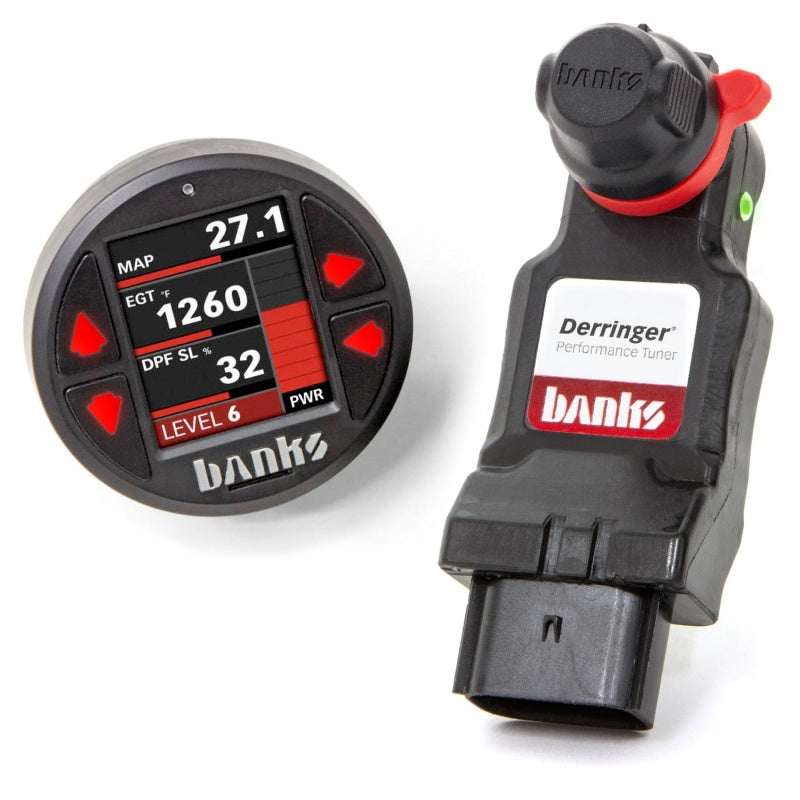
The listing also says the Derringer monitors its own health and returns the truck to stock power if it detects a problem, checking itself 100 times a second and setting a device diagnostic code when it bypasses.
Match the device to your goals:
- Towing and daily work: Choose a moderate level and prioritize cooling and transmission capacity.
- Better throttle response: A throttle controller such as the Banks Power Pedal Monster may suit you better than a full power tuner.
- Maximum power: Expect more heat and more wear, and plan accordingly.
If you are unsure which product fits your truck, reach out to My Parts Guy MPG Auto for help narrowing the options. Our guide to choosing a diesel tuner for Canadian owners walks through evaluating tuning providers step by step.
Step 3: Flash the Module and Adjust Boost and Torque Tables
Once the device is chosen, the actual change happens. The steps below describe the general process. Your device's instructions always come first.
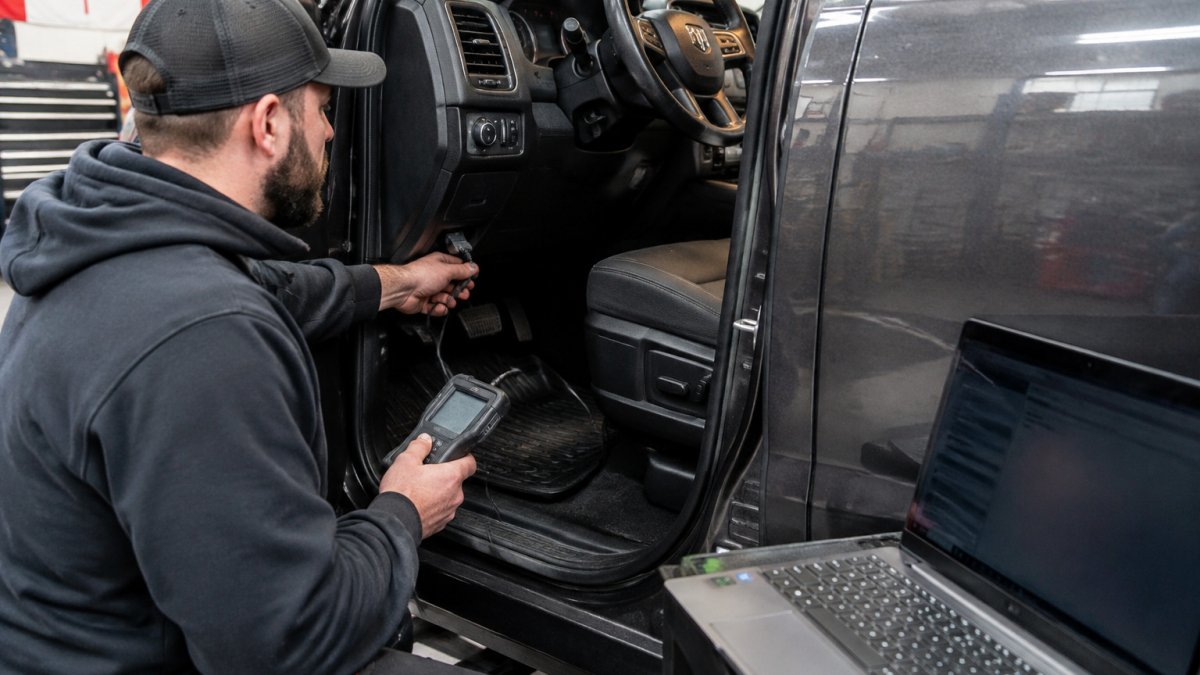
- Connect the tuner to the OBD-II port and confirm the vehicle is recognized.
- Save a backup of the stock calibration. This lets you return to factory settings if needed.
- Load the new calibration or select your power level.
- Adjust boost targets within the range recommended for your setup.
- Review torque limits so the transmission and drivetrain can handle the new output.
- Start the truck and let it idle until the ECM confirms the new settings.
Watch out: Never skip the stock backup. If a flash fails partway through, the backup is the fastest way to restore the truck.
Boost and torque tables control how hard the engine works under load.
Test drive gently after the first flash. Watch gauges for boost, exhaust gas temperature and coolant temperature.
How Long Does Diesel ECU Tuning Take, Start to Finish
Plan on a full day for a careful tune, including prep and testing. Parts shipping to Canada can add time, so see how long performance parts take to ship to Canada before you schedule. For a stage-by-stage view, see how to time a diesel ECU tune from drop-off to pickup.
For a plug-in device, installation may take one to two hours with basic tools. A full ECU flash is quicker but requires a stable power supply and a clean connection. Rushing a flash is a common source of problems.
A realistic start-to-finish plan looks like this:
| Stage | Typical Time | Notes |
|---|---|---|
| Pre-tune inspection | 1-2 hours | Check codes, filters, leaks |
| Device installation | 1-2 hours | Plug-in or flash setup |
| Calibration and flash | Under 1 hour | Stable voltage required |
| Test drive and monitoring | 1-3 days | Watch temperatures and boost |
Diesel Engine Tuning Risks, Emissions Rules and Troubleshooting Bad Tunes
Diesel tuning carries real risks, and honest guides should say so. More power means more heat, more pressure and more stress on the turbo, injectors, transmission and cooling system. Engine longevity depends on how far you push those limits and how well you maintain the truck. But the two areas most guides skip, what the law actually requires and how to diagnose a tune that is hurting the engine, are the ones that decide whether tuning is a good decision for you.
Legal and emissions compliance
In Canada, the rules that matter to a diesel owner are split between federal and provincial layers, and they are not the same thing.
At the provincial level, inspection and roadworthiness programs vary. Some provinces run periodic emissions or safety inspections; others do not.
There is also a practical distinction between a tune and a delete.
Watch out: Do not assume a product is legal for road use because it is sold online.
Troubleshooting a bad tune
A poor tune does not usually fail all at once. It shows a pattern, and the pattern tells you what is wrong.
- Black smoke under load: Too much fuel for the air available. Check for a boost leak first, then question the fuel table. Persistent black smoke also loads the diesel particulate filter faster.
- High exhaust gas temperature at light load: Often retarded injection timing or excessive fuel. If exhaust gas temperature climbs when it should not, stop the hard pulls and return to stock.
- Boost spikes or drops: A spike can indicate a sticking turbo vane mechanism or a boost control table that asks for more than the turbo can safely deliver. A drop can be a boost leak or a torque limit cutting power.
A useful sequence is to log data before and after the tune. Compare commanded versus actual rail pressure, commanded versus actual boost, and exhaust gas temperature under the same load.
Watch out: Avoid any tune that removes safety monitoring entirely.
Booking Your Next Step: Pick the Right Tuner for Your Truck
Understanding how diesel engine tuning works is the first step. The next is choosing a product that fits your truck and your goals.
For Ram 1500 and Jeep JL owners with the 3.0L EcoDiesel, the Banks Power Derringer Gen2 Tuner is a strong option to review.
Get started with My Parts Guy MPG Auto and pick a tuning setup you can drive with confidence.
Frequently Asked Questions
Does diesel tuning void my vehicle warranty?
It can. Many manufacturers look for signs of modified software when a claim involves the engine, drivetrain or emissions system. Tuners that are OBD-connected and fail-safe, such as the Banks Power Derringer Gen2 Tuner (66798, $1,104.58 CAD), are designed to return the truck to stock output when a fault is detected and to log a device code. Warranty coverage depends on your manufacturer and dealer, so ask them before installing any tune.
What are the risks of tuning a diesel engine?
The main risks are added heat and pressure on the turbo, injectors, transmission and clutch, plus fuel-related knock if fuel quality is poor. A poorly written tune can also cause drivability problems or trigger fault codes. Choosing a conservative level, monitoring EGT and coolant temperature, and using a tuner that automatically reduces power when a fault occurs all lower these risks.
How much horsepower can I gain from diesel tuning?
Gains vary by truck, tune level and supporting hardware, so no single figure applies to every engine. Tuners such as the Banks Derringer offer multiple power levels, with lower levels aimed at work use and towing and the highest level aimed at maximum output. Check the specific product listing and the tuner's dyno results for your model before expecting a particular number.
Is diesel tuning legal for road use?
Rules depend on the province and on emissions equipment. Tunes that disable or defeat emissions systems can create compliance problems, so review the emissions rules that apply where you drive and choose products that keep emissions controls intact. Ask the seller which tune and hardware are suitable for your use before you install anything.

