
How to Choose a Diesel Tuner: 7 Steps for Canadian Owners
Quick Summary
To choose a diesel tuner, first confirm it lists your exact year, make, model, engine and transmission, since compatibility filters out most options. Then match the tuner type to your goal, whether towing, daily driving or performance, and check the full cost.
- Record your truck's year, make, model, engine and transmission before browsing any tuner.
- Confirm the tuner lists your exact engine and year, not just the brand name.
- Choose preloaded tunes for a stock truck and custom calibration for multiple modifications.
- Check live monitoring and data logging, especially if you tow or push the engine hard.
- Add installation, calibration and maintenance costs to the device price before ordering.
Table of Contents
- Start With Your Truck: Year, Make, Model and Engine
- Define Your Goal: Towing, Daily Driving or Performance
- Tuner Types Compared: Handheld Programmers, Modules and Custom Tools
- Preloaded Tunes or Custom Calibration: Which Fits Your Truck
- Monitoring, Data Logging and Software Features to Check
- Budgeting for the Tuner, Installation and Future Upgrades
- Pick Your Tuner and Confirm Fit Before You Order
- Frequently Asked Questions
Start With Your Truck: Year, Make, Model and Engine
Last Updated: November 16, 2026
Choosing a diesel tuner starts with one question: which exact truck, engine and transmission are you tuning? A diesel tuner that works on a 2019 Ram with a Cummins may do nothing on a 2003 Ford with a Power Stroke.
A common mistake is to shop by brand name, then discover the device does not support the model year. Work through the truck's details first, then compare tuners that actually fit.
Building a Vehicle-Specific Compatibility Checklist
Write down these details before you browse any tuner:
- Year, make and model, such as 2008 Dodge Ram 2500
- Engine platform, such as Cummins 6.7L or Power Stroke 6.0L
- Transmission type and model, since some tunes affect shift behaviour
Next, check the tuner manufacturer's vehicle list against each item. A "compatible" label often covers only certain model years or engine configurations. Confirm the exact platform, not just the make.
Watch out: many listings say a device supports "Dodge diesel" without naming the engine. Ask for the specific engine and year in writing before you order.
Define Your Goal: Towing, Daily Driving or Performance
A tune should match how you use the truck. A calibration built for maximum horsepower can hurt fuel economy and drivability on the highway. A towing tune prioritizes torque at low RPM and transmission temperature control. A daily-driving tune focuses on smooth throttle response and everyday fuel use.
Decide your primary goal before comparing products:
- Towing: Look for torque gains, transmission temperature monitoring and boost control under load.
- Daily driving: Prioritize throttle response, cold-start behaviour and fuel economy.
- Performance: Accept reduced drivability and higher wear in exchange for more power, and plan for the added maintenance.
Most owners want a blend. Tell the tuner's support team how you drive, and ask which tune profile fits your use.
Tuner Types Compared: Handheld Programmers, Modules and Custom Tools
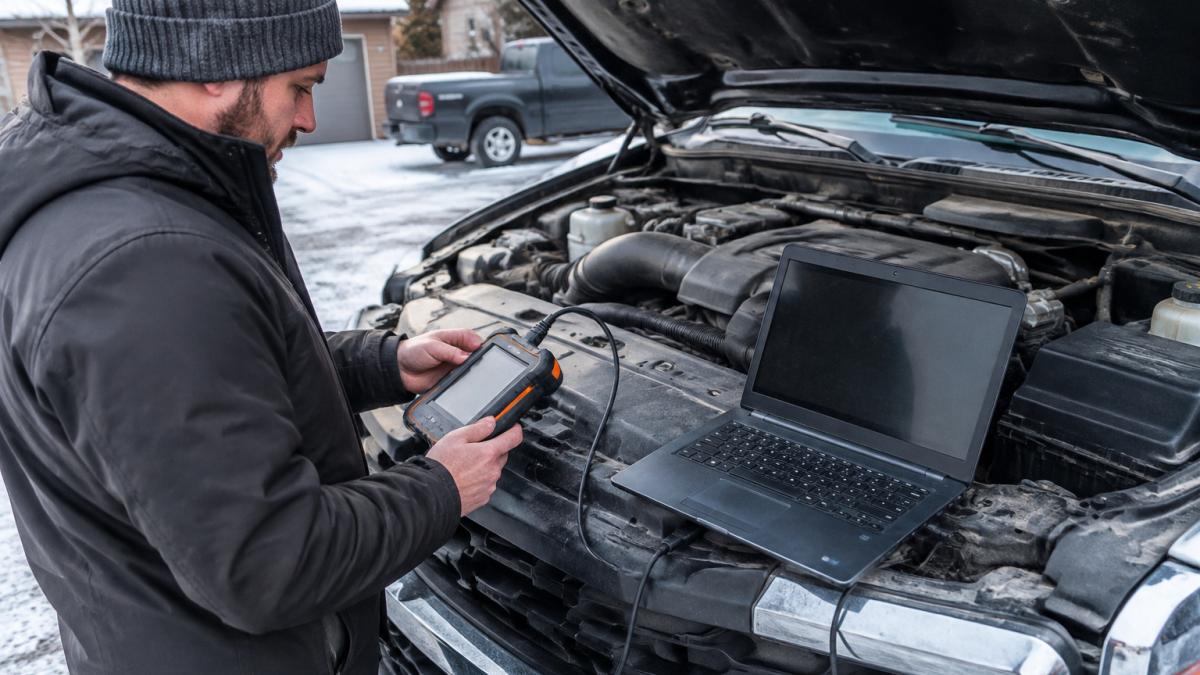
Diesel tuning products fall into a few categories. Each serves different buyers, budgets and levels of modification. The fastest way to narrow the field is to match the category to your truck's current state and your plans for the next few years, not to shop by brand name.
The Four Categories at a Glance
Handheld programmers and multi-gauge tuners plug into the OBD port and let you load preset tunes, monitor engine data and read diagnostic codes from one device. The Bully Dog 40420 GT diesel, vehicle tuner and multi-gauge vehicle monitor (CAD $474.99) is an example: its listing notes it stores up to 10 custom tune files and monitors more parameters than basic gauges. See the full specifications of this handheld diesel tuner and monitor.
Dedicated model tuners are built for one platform. The Smarty 03-07 Dodge Ram Cummins 5.9L Diesel S-06 (S-06 PoD) Tuner (CAD $840.49) is listed for the 03-07 Dodge Ram Cummins 5.9L diesel.
Touch-screen multi-gauge systems combine tuning with a larger display and more monitoring channels. Live cab data can help you judge how a tune behaves under load, while diesel engine performance upgrades offer another way to shape a truck’s capability.
Custom tuning tools and professional calibrations sit at the top end. A custom calibration is built for a specific truck, its modifications and its goals, and it usually costs more and takes longer than a preset.
A Simple Decision Framework for Beginners
Work through these questions in order. Stop at the first one that fits your situation.
- Is your truck stock or lightly modified, and do you want a modest, predictable gain? Start with a handheld programmer or a dedicated model tuner. You get quick installation, easy switching between tunes and a lower entry price.
- Do you tow regularly or want live engine data in the cab? Move up to a touch-screen multi-gauge system. The extra monitoring channels are the main reason to pay more.
- Do you run several modifications, or do you have a specific towing or performance target? Go to a custom calibration. A preset may not account for the combined effect of an intake, exhaust and turbo upgrade.
- Do you plan to change trucks or add major modifications within a few years? Favor a device with a broad compatibility list and update support over a dedicated model tuner that locks you to one platform.
Most owners want a blend of towing, daily driving and performance. Tell the tuner's support team how you drive, and ask which tune profile fits your use before you buy.
Pros and Cons by Tuner Type
- Handheld programmers: Pros include portability, quick installation and easy switching between tunes. Cons include limited tune customization and dependence on the manufacturer's preset library.
- Multi-gauge modules: Pros include real-time monitoring and built-in diagnostics. Cons include higher cost and the need to learn the interface.
- Dedicated model tuners: Pros include precise compatibility for one platform. Cons include no flexibility if you change trucks.
Total Cost of Ownership by Type
The sticker price is only the first line. Plan for these costs across the life of the device:
- Device price: from about CAD $474.99 for a handheld multi-gauge unit to over CAD $1,000 for a touch-screen system.
- Custom tune fees: a separate charge on top of the device when you choose a tailored calibration.
- Cables and licenses: some tools require a specific cable or a software license to connect to your truck and computer.
- Updates: confirm whether software and tune updates are free or paid, and how often they arrive.
A lower-priced tuner that does not support your next modification can cost more over time than a model that does.
Watch out: many listings say a device supports "Dodge diesel" without naming the engine. Ask for the specific engine and year in writing before you order.
The table below summarises the four tuner categories and the price points the article gives for each.
| Category | Best for | Key difference |
|---|---|---|
| Handheld programmers and multi-gauge tuners | Owners wanting tuning and monitoring in one unit | Plug into OBD port; stores preset tunes |
| Dedicated model tuners | One specific platform | Precise compatibility for one platform |
| Touch-screen multi-gauge systems | Towing or hard use needing live data | Larger display, more monitoring channels, Wi-Fi updates |
| Custom calibrations | Multiple modifications or specific targets | Tailored to exact setup; higher cost, longer lead time |
Preloaded Tunes or Custom Calibration: Which Fits Your Truck
Preloaded tunes are factory-style profiles built for common setups. They install quickly and cost less, which makes them a practical choice for a stock or lightly modified truck.
Choose preloaded tunes if your truck is largely stock and your goal is a modest, predictable gain. Choose a custom calibration if you run several modifications or want a specific towing or performance target.
How to Assess a Tuner or Calibrator Before You Pay
Use these questions to separate a careful calibrator from a reseller who forwards files.
- Data logging: Ask whether the calibrator reviews data logs from your truck before and after the tune. A calibrator who never looks at a log is guessing.
- Validation: Ask how the tune was validated on your exact engine code and transmission, not just the make and model.
- Revision support: Ask how many revisions are included and what triggers a free revision versus a paid one.
- Safety limits: Ask what limits the calibrator sets for boost, exhaust gas temperature and torque, and why those limits suit your use.
Measuring Results and Managing Risk
A tune is only as good as what you can measure. Record these values before the tune and again after, so you can compare rather than rely on a butt-dyno impression:
- Boost pressure under load, to confirm the tune behaves as intended.
- Exhaust gas temperature during a sustained tow, as an early warning of stress.
- Transmission temperature under load, since added torque raises heat.
- Fuel economy over a consistent route and load, not a single trip.
Results vary by truck, load and driving style, so treat any single number as a data point rather than a guarantee. If a value moves outside the range the calibrator described, stop and ask before you keep driving hard.
Watch out: a tune that raises power without a matching transmission strategy can shorten clutch or torque-converter life. Ask how the calibration handles shift pressure and torque limiting before you approve it.
Monitoring, Data Logging and Software Features to Check
A good tuner does more than change settings. Check these features before you buy:
- Live monitoring of boost, exhaust gas temperature, transmission temperature and fuel pressure
- Data logging so you can review engine behaviour after a drive or a tow
- Diagnostic code reading and clearing
- Tune file storage, such as the GT's 10-file capacity, for switching between profiles
Monitoring matters most when you tow or push the engine hard. Exhaust gas temperature and transmission temperature are early warnings of stress. Data logging also helps a tuner or technician diagnose problems quickly.
Budgeting for the Tuner, Installation and Future Upgrades
The tuner price is only part of the cost. Plan for these expenses as well:
- The tuner itself, from about CAD $474.99 for a handheld multi-gauge unit to over CAD $1,000 for a touch-screen system
- Installation labour if you cannot connect the device yourself
- Custom calibration fees if you choose a tailored tune
- Maintenance upkeep, since added power usually means more frequent fluid and component checks
A lower-priced tuner that does not support your next modification can cost more over time than a model that does. Ask whether the device supports the upgrades you plan within the next few years.
Pick Your Tuner and Confirm Fit Before You Order
Use this seven-step process to narrow your choice:
- Record your truck's year, make, model, engine and transmission.
- Confirm the tuner lists your exact platform, not just the brand.
- Define your goal: towing, daily driving or performance.
- Choose a tuner type: handheld, module, dedicated model or custom calibration.
- Check monitoring and data logging against your needs.
- Add up the full cost, including installation, calibration and maintenance.
- Confirm fit and return terms before you place the order.
Once you have a shortlist, compare the specific listings side by side. If you want help matching a tuner to your truck, contact My Parts Guy MPG Auto with your vehicle details before you buy.
Frequently Asked Questions
How do I choose the right diesel tuner for my truck?
Start by confirming the tuner supports your exact model year, engine and transmission. Then match the tuner to how you use the truck: towing, daily driving or performance. Check that the tuner offers the monitoring you need, such as exhaust gas temperature and transmission temperature. Finally, compare total cost, including the tuner, any licences and installation, before you buy. My Parts Guy carries the Bully Dog GT at $474.99 and Edge Products Diesel Evolution CTS3 units from $1,045.99 to help you compare options.
Is a custom diesel tune better than a canned tune?
A custom calibration is tailored to your truck's modifications, altitude, fuel and driving habits, so it usually suits trucks with upgrades or unusual use. A preloaded tune is faster to install and often costs less, and it works well for stock or lightly modified trucks. Neither is better in every case. Choose custom if you run added parts or tow heavy loads, and preloaded if your truck is stock and your needs are standard.
Can a diesel tuner affect my truck's warranty or emissions compliance?
Yes, it can. Some tunes change emissions-related settings, and dealers can detect altered software during warranty claims. Before installing any tuner, read the product listing to confirm whether it makes changes to emissions systems. Canadian emissions rules and warranty terms vary, so check your vehicle's warranty documents and ask a qualified technician about your specific situation.
What is the difference between a diesel tuner and a programmer?
The terms are often used interchangeably in the diesel market. Generally, a programmer loads or flashes calibration files onto the engine control module, while a tuner also includes features such as gauges, monitoring and data logging. Many modern units combine both functions, so focus on what the unit actually does rather than the label.
