
Choosing the Right Truck Performance Parts: A Buyer's Guide
Last Updated: November 3, 2026
Quick Summary
Choosing the right truck performance parts starts with defining what the truck is for, then matching upgrades to that goal. For most owners, a cold air intake, freer-flowing exhaust and a proper tune deliver the most noticeable improvement per dollar, followed by suspension and brakes.
- Identify your build goal before spending: daily driving, towing, off-roading or power gains.
- Sequence airflow first with intake then exhaust, and add tuning only after hardware is in place.
- Verify fitment against your VIN or door-jamb label, since charts miss engine and drivetrain differences.
- Stay OEM for sensors and emissions hardware; go aftermarket to change performance or durability.
- Towing builds should address cooling and brakes before adding power for durability.
Table of Contents
- Start With Your Goal, Not the Parts Catalog
- The Best Truck Performance Upgrades by Goal
- Truck Performance Parts Compatibility: What Fitment Charts Miss
- Aftermarket vs OEM Truck Parts: Which Way to Go
- Truck Upgrades for Towing: Building for Load, Not Lap Times
- Emissions, Road Legality and Warranty Risk
- How to Evaluate Performance Claims Before You Pay
- Build Your Upgrade Plan With My Parts Guy MPG Auto
- Frequently Asked Questions
Start With Your Goal, Not the Parts Catalog
Most truck owners open a parts catalog before they decide what they actually want the truck to do. That is the wrong order. Choosing the right truck performance parts starts with a single question: what is this truck for?
A truck performance part is any component that changes how the vehicle produces power, puts it down, or handles load, and the best upgrade is the one that serves your actual use case rather than the one with the loudest marketing.
Four Goals That Decide Every Upgrade
Almost every build falls into one of four buckets. Identify yours before you spend a dollar.
- Daily driving and fuel efficiency: prioritize airflow, low-rolling-resistance tires, and light suspension work. Gains are modest but livable.
- Towing and payload: cooling, exhaust flow, and brake capacity matter far more than peak horsepower.
- Off-roading: suspension travel, tires, and durability of engine components under heat and load.
- Performance and power gains: intake, exhaust, and engine tuning, in that order.
The Best Truck Performance Upgrades by Goal
The best truck performance upgrades are the ones matched to a defined outcome, not the ones with the biggest advertised numbers. For most owners, a cold air intake, a freer-flowing exhaust, and a proper tune deliver the most noticeable improvement per dollar. Suspension and brakes come next, because power you cannot control or stop is not an upgrade.
Here is how we would sequence a typical build:
- Verify fitment and current condition of the truck.
- Address airflow first: intake, then exhaust.
- Add tuning only after supporting hardware is in place.
- Upgrade brakes and suspension to match new power.
- Re-check emissions and warranty implications before each step.
Intake, Exhaust and Tuning: What Each One Actually Changes
Each of these three changes a different part of the equation, and stacking them out of order wastes money.
A cold air intake reduces restriction on the inlet side so the engine breathes more easily. Expect a modest gain on its own, with the real benefit arriving once exhaust flow is improved too.
If you are weighing how different systems will sound before you commit, our guide to performance exhaust sound profiles breaks down the tone and volume differences between designs. And if you plan to install the hardware yourself, our DIY truck exhaust installation tips walk through the practical steps and the mistakes to avoid.
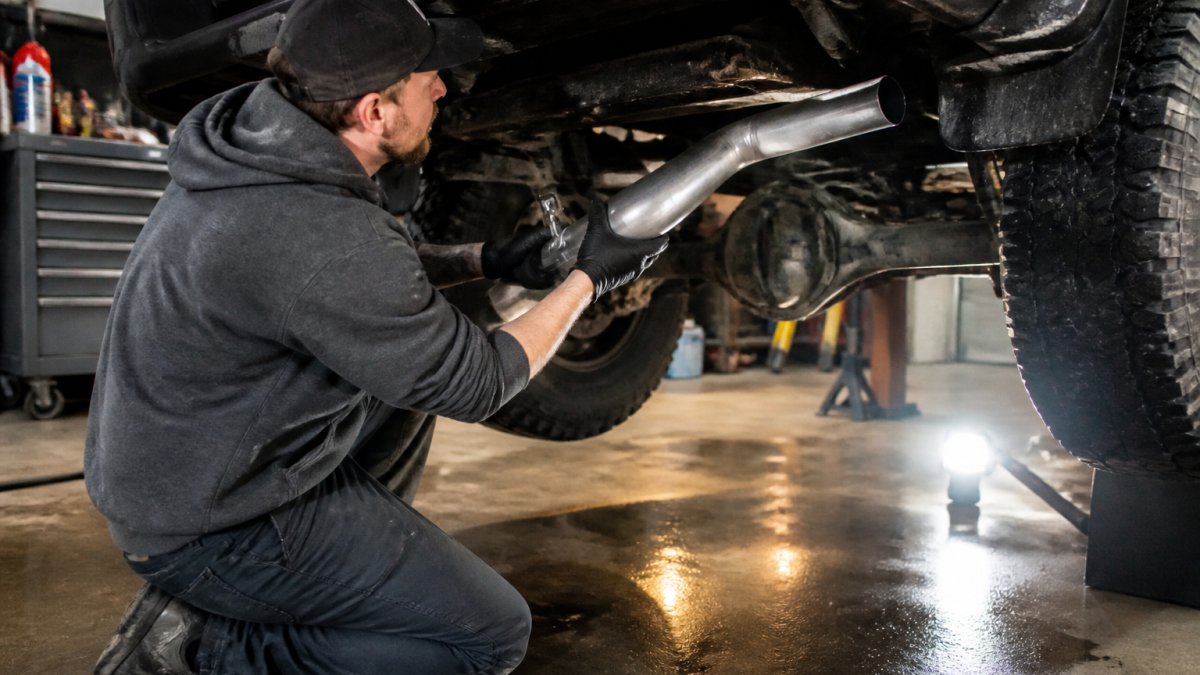
Here is how we would sequence a typical build.
| Step | What to do |
|---|---|
| 1 | Verify fitment and current condition of the truck |
| 2 | Address airflow first: intake, then exhaust |
| 3 | Add tuning only after supporting hardware is in place |
| 4 | Upgrade brakes and suspension to match new power |
| 5 | Re-check emissions and warranty implications before each step |
Truck Performance Parts Compatibility: What Fitment Charts Miss
Truck performance parts compatibility goes beyond make, model, and year. Fitment charts are a starting point, not a guarantee, and the gaps between the two cause most of the returns we see.
Verify these before you order:
- Engine configuration: the same model year can carry different engines with different intake and exhaust routing.
- Drivetrain and axle: two-wheel-drive and four-wheel-drive trucks often use different components.
- Body style: cab and bed length affect exhaust and suspension fitment.
- Emissions equipment: some trucks carry additional hardware that changes what bolts on.
The safest approach is to confirm the part number against your truck's VIN or door-jamb label, and to ask before you buy rather than after.
Aftermarket vs OEM Truck Parts: Which Way to Go
Aftermarket versus OEM truck parts is not a quality contest, it is a fit question. OEM parts match factory specifications exactly, which makes them the safe choice for warranty-sensitive repairs and for anything where you want the truck to behave as it did when new.
A practical rule of thumb:
- Stay OEM for sensors, emissions hardware, and anything a dealer will inspect under warranty.
- Go aftermarket when you are deliberately changing performance, durability, or cost on a wear item.
- Never mix blindly: an aftermarket part that fights the factory calibration can cost more in diagnosis than it saved.
For example, the BD Diesel exhaust manifold kit for the 5.7L HEMI uses extended fasteners and spacers, and a separate heat shield mounting location, to reduce stress on the fasteners.

Truck Upgrades for Towing: Building for Load, Not Lap Times
Truck upgrades for towing follow a different logic than performance builds. Heat and load, not peak horsepower, are the enemies. A truck that pulls a trailer up a long grade needs airflow, cooling capacity, and brakes that can shed heat repeatedly, plus a suspension that stays stable with weight on the hitch.
COMP Cams Camshaft Kit Stage 1 Dodge 5.7L HRT w/ VVT | CK201-300-17 →
Priorities shift accordingly:
- Exhaust and intake flow help the engine breathe under sustained load, but the gain that matters is reduced heat buildup, not peak horsepower. A freer-flowing exhaust lowers exhaust gas temperature and reduces the thermal load on the engine and nearby components.
- Cooling capacity is the upgrade most towing builds skip and later regret. Transmission and engine oil coolers, a larger radiator, and a fan that moves enough air at low speed do more for a towing truck than an intake. Watch out: adding power without adding cooling capacity shortens the life of the transmission and can trigger derate events on long grades.
- Brake components deserve more attention than most owners give them; trailer weight extends stopping distance, and repeated braking on descents builds heat that fades standard pads. Slotted rotors, higher-temperature pads, and fresh fluid with a higher boiling point are the practical starting points.
- Suspension and tires determine stability, and load-rated tires matter more than low-rolling-resistance compounds here. Helper springs, air bags, or a weight-distributing hitch address squat and sway without changing the truck's unloaded ride.
Sequencing matters as much as part selection. A common pattern is to address cooling and brakes before adding power, because those are the systems that protect the truck when the trailer is heavy and the grade is long.
Emissions, Road Legality and Warranty Risk
Emissions compliance and warranty exposure are the two places where an enthusiastic build can go badly wrong. In Canada, emissions requirements vary by province and by vehicle class, and removing or defeating emissions equipment can make a vehicle illegal for road use and can void warranty coverage on related systems. Before buying anything that touches the exhaust or engine management, confirm what your province requires and what your warranty states.
If legality is a concern, look for components explicitly sold as emissions-legal. The JBA emissions-legal Y-pipe for 1988-1991 GM C/K pickups is an example of a part designed to meet emissions requirements rather than sidestep them. Ask about warranty implications before you install, not after a dealer flags the work.
How to Evaluate Performance Claims Before You Pay
Performance claims are marketing until you can verify them. A dyno sheet from a different truck, a "up to" horsepower figure, and a generic compatibility badge tell you very little about what will happen in your vehicle. Treat every claim as a hypothesis to check.
Use this checklist before you pay:
- Is the claimed gain tied to a specific engine and supporting modifications?
- Does the seller publish a part number you can cross-reference?
- Is the part described as emissions-legal where that matters?
- Are the materials and construction specified, not just named?
- Does the listing state what else must be changed for the part to work?
If you are buying online, our guide to buying performance car parts online in Canada covers the practical checks. And if you are deciding where to spend, it is worth reading whether buying car parts from Canadian retailers actually works in your favor once shipping and fees are counted.
Build Your Upgrade Plan With My Parts Guy MPG Auto
The hard part of a build is not buying parts, it is sequencing them so each one supports the next instead of fighting it.
At My Parts Guy MPG Auto, we stock performance upgrades and essential components for cars and trucks, and we offer personalized customer service and support.
Get started with My Parts Guy MPG Auto and browse upgrades for your truck.
Frequently Asked Questions
What truck performance parts should I upgrade first?
Start with the upgrade that matches your goal and your truck's weakest link. For most owners that means a cold air intake and cat-back exhaust before anything internal, because they are bolt-on, reversible and do not require tuning. If you tow, look at transmission cooling and brake components first. Internal engine work such as a camshaft kit should come last, after supporting parts are in place. Write down your goal, budget and warranty position before ordering anything.
How do I know if a performance part will fit my truck?
Check more than make, model and year. Confirm engine configuration, cab and bed style, drivetrain, and whether your truck is a classic or new-generation body. A 5.7L HEMI manifold kit, for example, may list specific trims and explicitly exclude certain body styles. Read the fitment list on the product page line by line, compare the manufacturer part number, and ask before ordering. A quick message to the seller beats a return shipment.
Are aftermarket truck parts as reliable as OEM parts?
It depends on the part and the maker, not the label. Aftermarket covers everything from cheap no-name components to engineered kits tested on dynos and spintrons. OEM parts win on guaranteed fit and dealer support; quality aftermarket parts win on performance and price. Look for a named manufacturer, a real part number, stated materials and a warranty. Avoid listings with no brand, no specs and no support contact.
Can truck performance upgrades affect my warranty?
They can, depending on what you change and how your dealer handles it. A cat-back exhaust or a drop-in intake is usually low risk, while tuning, camshafts and emissions-related changes carry more exposure. In practice, a dealer must show that a modification caused the failure to deny a related claim, but that argument costs time and money. Keep receipts, ask your dealer in writing before major work, and choose parts that do not require removing emissions equipment.
Do performance parts affect fuel economy?
Sometimes, and not always in the direction owners expect. A cold air intake or free-flowing exhaust can improve efficiency slightly if you drive the same way, but the extra power often invites heavier throttle, which erases the gain. Larger tires, lift kits and aggressive aerodynamic changes cost fuel at highway speed. Low-rolling-resistance tires and correct maintenance usually do more for fuel efficiency than bolt-on power parts.
How do I choose between a cold air intake and an exhaust upgrade?
Pick based on what you want to notice. An intake is cheaper, installs in under an hour and changes engine sound under load. An exhaust system costs more but delivers the sound and tone most owners are actually after, plus weight and airflow benefits. If you can only do one, choose the exhaust for sound and the intake for budget. Doing both together, with a tune, is where the airflow gains add up.
A well-planned build is not about buying the most parts. It is about buying the right ones in the right order.

