
How to Reduce Brake Dust From Performance Pads?
Last Updated: November 20, 2026
Quick Summary
To reduce brake dust from performance pads, choose a low-dust ceramic compound matched to your driving, bed the pads properly, and brake progressively. Coat and clean your wheels regularly, and check for a sticking caliper if one wheel is consistently dirtier than the other.
- Ceramic pads generally produce less brake dust than semi-metallic pads.
- Match the pad compound to your duty cycle rather than chasing a dust claim alone.
- Bed new pads with varied stops to transfer an even layer onto the rotor.
- Let wheels cool fully before cleaning, then use a wheel-safe cleaner and soft brush.
- If one wheel is much dirtier, check the caliper slide pins for sticking.
Table of Contents
- Why Performance Pads Throw So Much Brake Dust
- Ceramic vs Semi-Metallic Brake Pads: Which Makes Less Dust?
-
Cutting Dust Without Giving Up Performance Braking
- Match the compound to the duty cycle, not the dust claim
- Street, spirited-driving, and track-use decision guide
- Bedding and transfer layer: the dust lever most drivers ignore
- Driving and cooling habits that change dust output
- Quantified comparisons: how to read dust claims
- Keep the performance pad and protect the wheel
- Performance Brake Pad Bedding Procedure
- How to Clean Brake Dust Off Wheels Step by Step
- Why Brake Dust Builds Up on One Wheel
- Choosing Low-Dust Pads for Your Next Brake Job
- Frequently Asked Questions
Why Performance Pads Throw So Much Brake Dust
Brake dust is the fine, dark powder that collects on your wheels after a few drives, and performance pads tend to produce more of it than standard pads.
Brake dust is the residue left when pad friction material wears against the rotor. Each stop shears off tiny particles of pad compound, rotor metal and binder, and some of that debris sticks to your wheels.
What brake dust is and how it forms
Every time you brake, the pad presses against the rotor and generates heat and friction, wearing both surfaces. The hot, light particles travel outward and land on the wheel face. Dust output rises with heavier braking, higher temperatures and softer, more aggressive compounds.
How pad friction material affects dust output
The friction material is the biggest variable you control. Aggressive compounds bite harder and stop shorter, but shed more material. Softer compounds wear more slowly into a quieter, lower-dust profile, though they can fade sooner under sustained heat. Choosing a pad is always a trade-off between bite, dust and pad life.
Ceramic vs Semi-Metallic Brake Pads: Which Makes Less Dust?
For most drivers, ceramic pads produce noticeably less dust than semi-metallic pads. Ceramic compounds wear into finer, lighter particles that are less likely to cling to the wheel. Semi-metallic pads contain more metal fibres, which improves heat transfer and bite under hard use but leaves darker, heavier dust.
| Pad Type | Dust Output | Cold Bite | Heat Tolerance | Best For |
|---|---|---|---|---|
| Ceramic | Low | Moderate | Good | Daily driving, low-dust goals |
| Semi-metallic | High | Strong | Very good | Spirited and track use |
| Organic | Low to moderate | Soft | Limited | Light commuting |
Pros of ceramic pads: quieter operation, lower dust, longer rotor life in normal use. Cons of ceramic pads: less bite when cold, higher cost per set. Pros of semi-metallic pads: strong bite, handles heat well, durable under hard stops. Cons of semi-metallic pads: heavy dust, more rotor wear, can be noisy.
Low-dust pad options and their trade-offs
Low-dust pads are built around ceramic formulations, often with carbon-fibre reinforcement. They keep wheels cleaner, but may feel softer on the first few stops and need proper bedding before performing at their best. If you drive hard, expect a trade-off in fade resistance versus a dedicated track compound.
Cutting Dust Without Giving Up Performance Braking
Ceramic pads are often suggested for lower dust, but they may not suit every driver. If you bought performance pads for track days, mountain descents, towing, or a heavy car that needs high-temperature bite, the goal is to keep the compound you need and manage the dust around it through pad selection, bedding, driving habits and wheel protection.
Match the compound to the duty cycle, not the dust claim
Dust output is a function of how much friction material wears away per stop, driven by compound formulation, operating temperature and how hard you use the brakes. If you are wondering whether slotted rotors really improve braking performance, that is a separate question from dust and is worth checking before you choose a setup. A pad that is gentle at commuter temperatures can dust heavily once pushed past its intended range, and a track compound that dusts heavily on the street may wear more evenly in its designed temperature window.
Street, spirited-driving, and track-use decision guide
Use this matrix to decide which trade-offs are acceptable for your driving. The point is not to rank pads as 'good' or 'bad' but to make the compromise explicit before you buy.
| Use case | Priority | Acceptable trade-off | Dust management approach |
|---|---|---|---|
| Daily commuting, mostly city | Clean wheels, quiet, long rotor life | Slightly softer cold bite, lower fade threshold | Low-dust ceramic performance pad; coat wheels; clean every 1-2 weeks |
| Spirited weekend driving, occasional autocross | Balance of bite and dust | Some dust, occasional noise when cold | Performance ceramic or mild semi-metallic; bed properly; coat wheels |
| Regular track days or heavy towing | Fade resistance and consistent bite | Higher dust, more rotor wear, possible noise | Dedicated high-temp compound; accept dust; clean after events; consider separate track wheels |
| Mixed street and track on one setup | Compromise | Dust between the two extremes; shorter pad life | Choose a pad rated for both; monitor transfer layer; clean more often |
Bedding and transfer layer: the dust lever most drivers ignore
Bedding transfers an even layer of pad material onto the rotor. A proper transfer layer gives consistent bite and reduces uneven pad deposits that look like dust but are actually bonded material.
Watch out: stopping hard and then holding the brake pedal down at a standstill can imprint pad material onto one spot of the hot rotor, which creates vibration and a stubborn deposit that no wheel cleaner will remove.
Driving and cooling habits that change dust output
Dust is proportional to energy dissipated, so the biggest habit lever is braking less aggressively and more progressively. Looking further ahead, engine braking where appropriate, and avoiding repeated hard stops all reduce peak pad temperatures and material shedding. Even with gentler braking and proper cooling, some residue can remain on the wheel face, so choosing wheel cleaners for brake dust that suit the wheel’s finish helps keep cleanup from adding unnecessary wear.
Quantified comparisons: how to read dust claims
Dust reduction claims are usually measured by the pad manufacturer under its own test cycle, often against a reference OEM pad on a specific vehicle. An '80 percent less dust' claim is directional, not a guarantee for your car, route or braking style. Look for the reference pad, vehicle and test cycle; if a claim does not state those, treat it as marketing.
Keep the performance pad and protect the wheel
If you are keeping a dustier compound, the wheel coating matters as much as the pad. A quality wheel coating or sealant creates a sacrificial layer that stops dust from bonding, so a rinse and soft brush removes most of it. Coat the barrel as well as the face, because baked-on barrel dust is what makes wheels look permanently dirty.
Performance Brake Pad Bedding Procedure
Bedding is how a new pad transfers an even layer of friction material onto the rotor. Skipping it causes uneven wear, vibration and inconsistent bite, and it can make dust worse.
A common mistake is stopping on the same spot repeatedly during bedding, which deposits material unevenly and creates hot spots. Vary your stops across the rotor face.
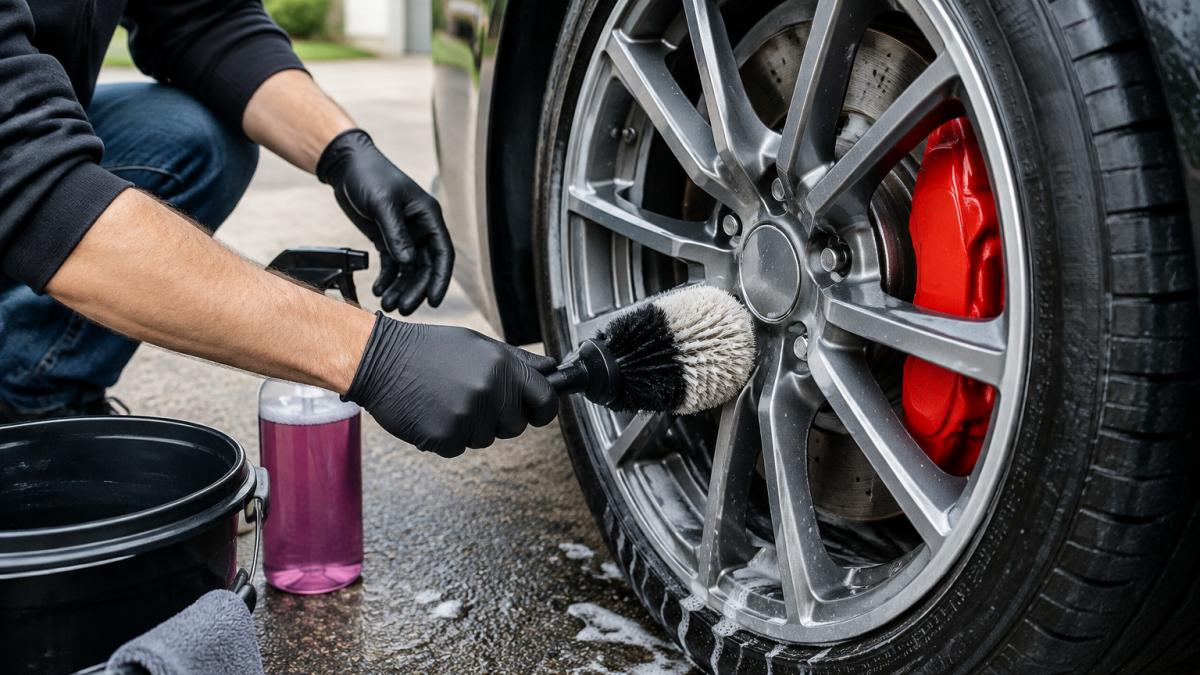
How to Clean Brake Dust Off Wheels Step by Step
- Let the wheels cool completely. Never spray cleaner on hot brakes.
- Spray a wheel-safe cleaner onto the cool wheel face and barrel.
- Let it dwell for a minute or two, without letting it dry.
- Agitate with a soft wheel brush, working into the spokes and around the caliper.
- Rinse thoroughly with clean water.
- Dry the wheel and apply a protective coating if you want dust to release more easily next time.
Check that your cleaner is labelled safe for your wheel finish before you use it.
Why Brake Dust Builds Up on One Wheel
Uneven dust on a single wheel is a useful diagnostic signal. Normal pad dust is usually fairly even side to side because both front wheels do similar work. When one wheel is consistently dirtier, or the dust looks different (wet, clumpy, rusty, or mixed with grease), the cause is usually mechanical rather than the pad compound.
Normal dust versus abnormal dust
Normal brake dust is a dry, fine, dark or grayish powder that builds up gradually and rinses off with a wheel cleaner. Abnormal signs include: one wheel noticeably dirtier than the other on the same axle; dust that looks wet or oily (possible brake fluid or grease); reddish-brown staining that does not rinse off (rust or baked-on deposits); heavy dust on one side only after a long drive; or dust accompanied by pulling, grinding or dragging.
Diagnostic sequence for one dirty wheel
- Compare both sides on the same axle. A small difference is normal; a large, repeatable difference points to a mechanical issue.
- Check caliper slide pins and boots. A sticking slide pin keeps the pad in light contact with the rotor, which wears the pad and sheds dust continuously. Look for torn boots, dry or contaminated grease, and pins that do not move freely.
- Check the piston and caliper body. A seized or partially seized piston can drag the pad. Look for uneven pad wear between the inner and outer pad.
- Inspect pad wear across the axle. A pad that is much thinner on one side suggests drag, a sticking caliper, or a collapsed hose.
- Check the rotor face. Scoring, heavy grooving, or a blue tint can indicate overheating or a dragging brake. A warped rotor usually shows up as pulsation, not just dust.
- Check for fluid or grease leaks. A leaking caliper seal or a torn CV boot can throw grease onto the wheel and trap dust, making it look like the brake is dusting more.
- Confirm fitment and hardware. Mismatched pads, missing shims, or incorrect hardware can cause uneven contact and noise.
Watch out: if one wheel is hot to the touch after a normal drive while the others are cool, stop driving and have the brake inspected. A dragging caliper can overheat the wheel, damage the rotor, and in severe cases affect wheel-bearing life.
What each cause does to dust output
A sticking caliper or slide pin keeps the pad in contact with the rotor between stops, so the pad wears continuously rather than only during braking, producing more dust and often a darker, more metallic residue. A warped or unevenly worn rotor changes the contact pattern, causing uneven transfer layer and localized dust. Mismatched pads left to right can also change wear rates.
When to inspect versus when to replace
If the uneven dust is new and accompanied by noise, pulling or a hot wheel, inspect immediately. If it is mild and stable, add it to your next brake service checklist: measure pad thickness, check slide pin movement and inspect the rotor face. Replacing pads without fixing a sticking caliper will just wear the new pads unevenly and reproduce the same dust pattern.
Choosing Low-Dust Pads for Your Next Brake Job
Start with how you drive. If your priority is clean wheels and you mostly commute or drive on the street, a low-dust ceramic performance pad is the right direction. If you track the car, accept more dust in exchange for fade resistance.
For Power Stop owners, the Power Stop Z23 Evolution Sport ceramic pads are built with a low-dust carbon-fibre ceramic formula and include stainless-steel hardware and ceramic brake lubricant. The Z23 pad for the 2017-2019 Chrysler Pacifica is listed at $85.49 CAD, and you can browse performance pads for your vehicle to find your fitment.
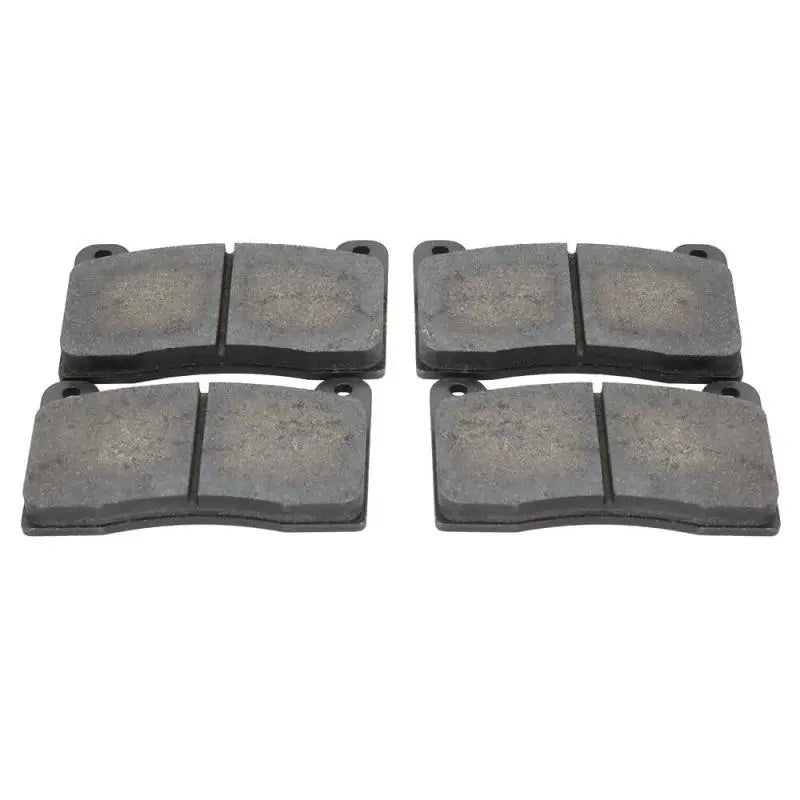
Confirm fitment against your exact year, make, model and submodel before ordering, and ask for help if you are unsure.
Frequently Asked Questions
Do ceramic brake pads produce less dust than semi-metallic pads?
Generally yes. Ceramic pads use a binder and fibre mix that sheds less material and produces lighter, less visible dust than semi-metallic compounds. Ceramic pads also tend to run quieter and cause less rotor wear. The trade-off is that some ceramic compounds have lower friction when cold and can fade under sustained hard braking, so match the compound to how you actually drive. Track-focused pads often use semi-metallic formulas for stronger bite at high temperature, even though they produce more dust.
Can I reduce brake dust without changing my performance pads?
Partly. You can cut visible dust by cleaning wheels regularly, applying a protective wheel coating, and avoiding unnecessary heavy braking in traffic. Proper bedding also helps the pad surface settle and can reduce excess deposits. However, if your current pads are a high-friction metallic compound, the material itself is the main source of dust, so switching to a low-dust ceramic performance pad is the most effective long-term fix.
Do low-dust brake pads affect stopping power?
They can, depending on the compound. Low-dust ceramic performance pads are designed to keep strong friction for street and spirited driving, but they usually have less bite when cold and may not match a metallic race pad under extreme heat. For everyday driving, the difference is rarely noticeable. For track use, check the pad's rated temperature range and choose a compound built for that workload.
Why does brake dust build up on just one wheel?
A single wheel collecting heavy dust often points to a caliper that is sticking, a pad that is seating unevenly, or a brake hose that is restricting release. Check whether the caliper slides freely, whether the pad wears evenly, and whether the rotor shows uneven wear. Addressing the root cause will reduce dust on that corner and protect the rotor.
