
How to Avoid Duty Fees in Canada: 7 Proven Steps
Table of Contents
- Step 1: Understand What You're Actually Paying For
- Step 2: Check the Duty-Free Import Limits Before You Order
- Step 3: Use a Canadian Import Duty Calculator
- Step 4: Know How Customs Duty on Auto Parts Is Applied
- Step 5: Choose a Shipping Method That Reduces Brokerage Fees on International Shipments
- Step 6: Verify Tariff Classification and Country of Origin
- Step 7: Order From a Canadian Seller to Avoid Duty Fees Entirely
- Conclusion
- Frequently Asked Questions
Last Updated: October 17, 2026
Step 1: Understand What You're Actually Paying For
Most people think a surprise charge at the door is "duty." Usually, it isn't, and learning how to avoid duty fees in Canada starts with knowing which fee you're actually paying. Learning how to avoid duty fees in Canada starts with knowing exactly which fee you're trying to dodge.
Here's the thing nobody tells you: the bill from the courier is often a stack of separate charges, and only one of them is actual duty.
Duty vs. GST/HST vs. Brokerage: The Four Fees Explained
Customs duty is a tax on imported goods, set by the product's tariff classification and country of origin. GST/HST is the sales tax applied to the value of the goods plus duty. Brokerage is what a carrier charges to clear your parcel through customs. Disbursement fees are interest-style charges a carrier adds for paying the tax upfront on your behalf.
That's four different charges, and each has a different fix. At My Parts Guy MPG Auto, we see this confusion constantly: a customer blames "duty" for a charge that was actually a brokerage fee on a low-value parcel.
Quick breakdown of what each one is:
- Duty: a percentage of the item's value, based on HS code and origin
- GST/HST: federal and provincial sales tax on the landed value
- Brokerage: the carrier's fee for clearing customs
You can legally reduce or eliminate some of these. Others you can't. Knowing which is which is the whole game.
Step 2: Check the Duty-Free Import Limits Before You Order
Canada sets low-value shipment thresholds that decide whether a parcel sails through or gets assessed. The rules differ by shipping route and by tax type, so check both before you click buy. Most guides wave at this topic without giving you the actual mechanics. Here is the plain-language version.
The Two Thresholds You Need to Know
There are two separate questions at the border: does duty apply, and does GST/HST apply? They are governed by different rules and different dollar figures.
- Duty relief for low-value shipments: Shipments below a set value can enter duty-free under the Courier Imports Remission Order and the Postal Imports Remission Order. The duty-free threshold is higher for courier shipments than for postal shipments, and it applies per shipment, not per item.
- GST/HST relief for low-value shipments: The sales-tax relief threshold is separate and generally lower than the duty threshold. A parcel can clear duty-free yet still arrive with GST/HST owing.
Because these figures are set by regulation and can change, confirm the current numbers on the CBSA low-value shipment guidance before you order. What does not change is the structure: duty relief and tax relief are two different rules, and passing one does not mean you pass the other.
Why the Shipping Route Changes the Math
A parcel arriving by courier and a parcel arriving by post are treated differently at the border.
That trade-off matters more than the threshold alone. A courier parcel that clears duty-free can still arrive with a brokerage bill larger than the duty would have been. A postal parcel that triggers duty may still cost less overall because the handling fee is smaller.
The Origin Variable Nobody Mentions
Thresholds are not the only filter. Country of origin sits on top of them. Goods that qualify under a free trade agreement can enter duty-free regardless of value, provided the rules of origin are met and documented. That means a shipment above the low-value threshold can still avoid duty if the origin claim is valid. Conversely, a shipment below the threshold from a non-agreement country may still face duty if the remission order does not apply to that route or product type.
A Practical Pre-Order Check
Before you order, run through these four questions in order:
- Which route? Courier or post. This sets which remission order applies.
- What is the shipment value in CAD? Convert before you compare, not after.
- Does duty relief apply at that value for that route? If not, duty is in play.
- Does GST/HST relief apply at that value? If not, tax is in play even if duty is not.
If any answer is unclear, ask the seller which carrier and service level they use. The route is decided at checkout, not at the door, and it is the single biggest lever you control before the parcel ships.
Step 3: Use a Canadian Import Duty Calculator
A Canadian import duty calculator estimates your total landed cost before you buy: duty, GST/HST, and any brokerage. It turns a guess into a number.
Here is how we would use one:
- Enter the item's price in CAD
- Add shipping and insurance (these count toward value for duty)
- Select the HS code or product category
- Enter the country of origin
- Read the estimated duty and tax
Landed cost is the real price. A part that looks cheaper from a foreign seller can cost more once duty, tax, and brokerage stack on top.
Step 4: Know How Customs Duty on Auto Parts Is Applied
Customs duty on auto parts depends on two things: the part's tariff classification and where it was made. Get either wrong and you pay more than you should.
Auto parts carry different duty rates by category. Brake components, exhaust systems, and engine parts can each fall under different HS codes.
What most guides miss is that the rate you pay is decided at the border, not at checkout.
Step 5: Choose a Shipping Method That Reduces Brokerage Fees on International Shipments
Brokerage fees on international shipments vary wildly by carrier and service level. The cheapest shipping option at checkout is often the most expensive at the door. Most guides tell you to "compare all-in cost" and stop there. The useful version explains what the carrier is actually charging you for and how to take that job away from them when it is worth doing.
What Brokerage Actually Is
When a parcel crosses the border, someone has to present it to the Canada Border Services Agency: classify the goods, declare the value, and pay any duty and tax owing.
That is why the bill at the door is often larger than the duty itself. On a low-value parcel, the brokerage and disbursement can exceed the actual duty and tax combined.
How Carrier Brokerage Differs
Carriers structure these charges differently, and the structure matters more than the headline rate:
- Integrated couriers typically bill brokerage as a separate line item, often tiered by shipment value, with a disbursement fee added when they advance duty and tax. Some offer a brokerage-included service level at a higher freight rate.
- Postal services tend to have lower handling charges but a lower duty-free threshold and slower timelines. The handling fee is usually a flat amount rather than a percentage.
- Freight forwarders and consolidation services may bundle clearance into the freight rate, which can be cheaper overall but makes the brokerage component harder to see.
The practical move is to ask the seller, before checkout, which carrier and service level they use and whether brokerage is prepaid, bundled, or billed on delivery. A seller who cannot answer that question is a seller whose parcel will surprise you.
Self-Accounting: Clearing Customs Yourself
Self-accounting means you handle the customs declaration and pay duty and tax directly to the government, skipping the carrier's brokerage. It takes more paperwork, but on a large order it can save real money.
The general sequence is:
- Get the commercial documents from the seller before the parcel arrives: commercial invoice, HS code, country of origin, and proof of origin if a trade agreement applies.
- Arrange for the carrier to release the parcel to you for self-clearance rather than clearing it on your behalf. Ask the carrier in advance; some charge a fee to hold the parcel while you clear it.
- Present the declaration and pay duty and tax directly. The CBSA provides guidance on the accounting process for importers who clear their own goods.
- Keep the documents. If an assessment looks wrong later, the paperwork is your evidence.
Self-accounting is not worth it on a small parcel. The time cost exceeds the brokerage saved. It becomes worth considering when the brokerage fee is a meaningful percentage of the order value, which is common on higher-value parts and equipment.
The Pre-Checkout Checklist
Before you pay, confirm four things in writing:
- Which carrier and service level the seller uses
- Whether brokerage is prepaid, bundled, or billed on delivery
- Whether the seller will provide the HS code and country of origin on the commercial invoice
Get those answers and the shipping method stops being a gamble. Skip them and the cheapest option at checkout becomes the most expensive line on the bill at the door.
Step 6: Verify Tariff Classification and Country of Origin
Two documents decide your duty rate: the HS code and the proof of origin. Verify both before the parcel ships, not after.
Tariff classification is the process of matching your part to the correct HS code. Country of origin is where the goods were made, not where the seller ships from.
How to check:
- Ask for the HS code in writing
- Request a certificate of origin if a trade agreement applies
- Match the code to the CBSA customs tariff schedule
If an assessment looks wrong, you can dispute it. You have the right to request a reassessment with the correct documents.
Step 7: Order From a Canadian Seller to Avoid Duty Fees Entirely
The simplest way to avoid duty fees in Canada is to buy from a Canadian seller.
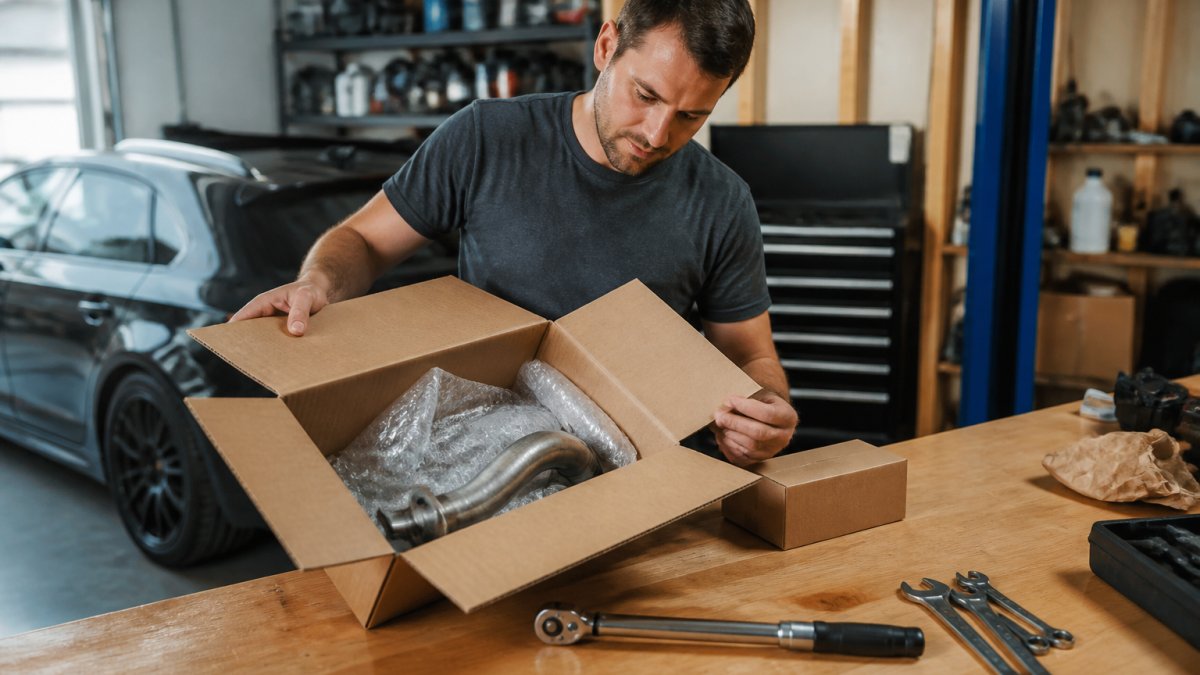
This is where the math gets interesting. A foreign price that looks lower often isn't, once duty, GST/HST, brokerage, and disbursement are added.
That's the model we built My Parts Guy MPG Auto around.
For performance car enthusiasts and truck owners alike, the difference is simple: one price, no border surprises.
Conclusion
The real challenge isn't finding a lower sticker price. It's knowing your true landed cost before you pay, and most shoppers only find out at the door.
If you'd rather skip the customs math entirely, My Parts Guy MPG Auto ships from Canada with no duties or brokerage fees, competitive pricing backed by constant competitor monitoring, and real people who know parts and will help you pick the right one.
Frequently Asked Questions
What is the difference between customs duty, sales tax, and brokerage fees?
Customs duty is a tariff charged on certain imported goods based on their classification and country of origin. GST/HST is the sales tax applied to the value of the goods plus duty. Brokerage fees are charged by the carrier or a customs broker to clear your package through the border, and a disbursement fee covers the carrier paying duty and tax on your behalf. Only duty and tax are government charges; brokerage and disbursement fees are carrier charges you may be able to reduce by self-clearing.
How much can I spend on an imported order before paying duty?
There is no single duty-free import limit that applies to every shipment. Canada Post and courier routes handle low-value shipments differently, and the rules vary by tax type. GST/HST generally applies to most commercial imports regardless of value, while duty depends on the tariff classification and country of origin of the goods. Before ordering, use a Canadian import duty calculator and confirm the current low-value shipment rules with the Canada Border Services Agency.
Can choosing a different shipping method reduce customs charges?
It can reduce the fees you pay, though not the government duty or tax itself. Courier companies often charge brokerage and disbursement fees on top of duty and tax, while postal shipments may be assessed differently. Some couriers let you self-clear your package at a CBSA office to avoid their brokerage fee. Ask the seller which carrier they use and compare the total landed cost, not just the shipping price, before you check out.
How can I avoid unexpected customs fees when buying auto parts online?
Estimate the landed cost before you buy: add the item price, shipping, estimated duty, GST/HST, and any brokerage fee. Confirm the HS code and country of origin with the seller so you know whether a free trade agreement applies. The simplest way to avoid duty fees is to order from a Canadian seller that ships domestically, since no border clearance, duty, or brokerage is involved. Keep your customs invoice and supporting documents in case you need to dispute an assessment.
