
Best Performance Exhaust Systems for Trucks: 2026 Guide
Table of Contents
- Why Truck Owners Upgrade to a Performance Exhaust System
- Quick Comparison: Performance Exhaust Kits and Pricing
- Ranked Picks: Best Performance Exhaust Systems for Trucks
- Truck Cat-Back Exhaust Systems: What You Get for the Money
- Cat-Back vs Axle-Back Exhaust: Which Layout Fits Your Truck
- Performance Exhaust for Diesel Trucks: What Changes
- Truck Exhaust Systems for Towing: Torque, Drone and Payload
- How to Match an Exhaust Kit to Your Make, Model and Engine
- Frequently Asked Questions
Last Updated: October 14, 2026
Why Truck Owners Upgrade to a Performance Exhaust System
Performance exhaust systems for trucks are aftermarket replacements for your truck's factory exhaust that reduce back pressure and improve exhaust flow, which can add horsepower, sharpen throttle response and free up torque.
The gains are real but modest: a cat-back on a gas truck adds a small amount of power and torque rather than transforming it, and the honest benefit is sound, durability and throttle feel.
Quick Comparison: Performance Exhaust Kits and Pricing
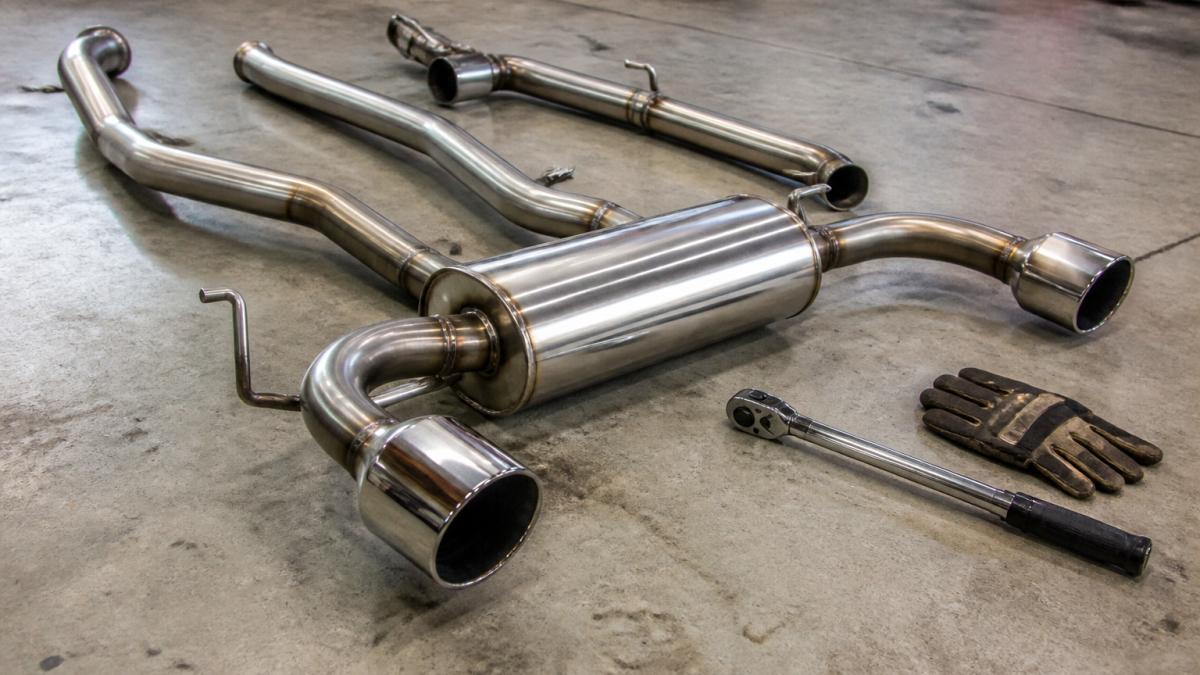
Here is how our current truck exhaust kits compare on price, material and intended use. Every system below is a cat-back or filter-back design in corrosion-resistant stainless steel.
| System | Fits | Price | Sound Level | Best For |
|---|---|---|---|---|
| MagnaFlow PRO DPF 19694 | 2024+ Silverado/Sierra 2500HD-3500HD | $1,595.50 | Mild interior, moderate exterior | Diesel HD daily driving |
| Borla ATAK 141015 | 2020-2025 F-250/F-350 7.3L | $1,863.99 | Aggressive, drone-free | Gas Super Duty owners |
| AWE 0FG 3015-23058 | 2015-2020 F-150 V8 | $1,575.99 | Refined, no drone | Half-ton V8 daily drivers |
| MagnaFlow 19200 | 2014-2025 Ram 2500/3500 6.4L | $1,915.50 | Moderate exterior, mild interior | Ram HD gas towing |
| MagnaFlow 17200 | 2011-2016 F-250/F-350 6.2L | $1,124.50 | Very aggressive | Lifted and off-road builds |
Ranked Picks: Best Performance Exhaust Systems for Trucks
These are the systems we would put on our own trucks, ranked by how well each does its job.

MagnaFlow Street Series Cat-Back for Ram 2500 and 3500 6.4L
The MagnaFlow 19200 is our pick for Ram HD gas owners who tow. Its 4-inch mandrel-bent piping and two straight-through mufflers keep interior sound mild while giving the 6.4L Hemi a resonant tone outside. The direct-fit design covers Crew Cab and Mega Cab, backed by a limited lifetime warranty.

Borla ATAK Cat-Back for Ford F-250 and F-350 7.3L
Borla's 141015 is a system we stock for the 7.3L Godzilla V8, and the Polyphonic Harmonizer muffler makes it livable by harmonizing multiple exhaust notes for aggressive ATAK sound without drone. Built from T-304 stainless steel with a Million-Mile Warranty, it adapts across Ford wheelbases with optional extension pipes.
AWE 0FG Cat-Back for Ford F-150 V8
For half-ton V8 owners, the AWE 0FG is a smart option. Its patented 180 Technology resonator cancels drone at cruising speed, so highway driving stays quiet until you open the throttle. The 3-inch T304L stainless build carries a lifetime warranty, an AWE No CEL Guarantee, and individually adjustable Diamond Black tips.
MagnaFlow PRO DPF Series for Silverado and Sierra HD Diesel
Diesel owners need a different approach, and the MagnaFlow 19694 filter-back kit is built for it. The 5-inch mandrel-bent piping with a muffler delete is emissions-legal and tuned for mild interior, moderate exterior sound. It fits 2024+ Silverado and Sierra 2500HD/3500HD models, including Denali Ultimate and AT4X trims.
MagnaFlow Off-Road Pro Series for Lifted and Off-Road Trucks
The MagnaFlow 17200 hugs the undercarriage for improved ground clearance, which is why lifted-truck owners choose it. It produces very aggressive exterior sound, ends in a turndown before the rear axle, and is 100% stainless steel. For 2011-2016 F-250/F-350 6.2L trucks, it is the most affordable system here at $1,124.50.
Truck Cat-Back Exhaust Systems: What You Get for the Money
Performance exhaust systems for trucks replace everything from behind the catalytic converter to the tailpipe, including the muffler, piping and tips. That is why it costs more than a muffler swap: you are buying mandrel-bent piping, a tuned muffler and a direct-fit layout engineered for your truck.
What separates a $1,100 kit from a $1,900 one comes down to pipe diameter, material grade and sound engineering. A 3-inch system suits a stock half-ton; 4-inch or 5-inch is sized for a 6.4L or diesel.
Cat-Back vs Axle-Back Exhaust: Which Layout Fits Your Truck
Cat-back and axle-back systems differ in how much of the factory exhaust they replace. A cat-back swaps the muffler, mid-pipe and tailpipe from the catalytic converter backward; an axle-back replaces only the muffler and tailpipe behind the rear axle.
That difference decides your results. Cat-back systems change exhaust flow and sound more noticeably because they replace more restrictive factory piping. Axle-back systems are cheaper, easier to install and mostly a sound and appearance upgrade.
| Factor | Cat-Back | Axle-Back |
|---|---|---|
| Components replaced | Converter back to tip | Muffler and tailpipe |
| Sound change | Moderate to aggressive | Mild to moderate |
| Install difficulty | Moderate, DIY possible | Easy |
| Price range | Higher | Lower |
| Flow improvement | Greater | Limited |
Performance Exhaust for Diesel Trucks: What Changes
Performance exhaust for diesel trucks follows different rules than gas: the emissions system stays in place. Modern diesels run a diesel oxidation catalyst, a diesel particulate filter (DPF), and selective catalytic reduction with diesel exhaust fluid.
That is not a limitation, it is the point. A filter-back kit like the MagnaFlow 19694 keeps your truck emissions-legal while opening flow after the filter, and the larger 5-inch piping suits turbo-diesel airflow.
Emissions and road-use rules vary by jurisdiction
There is no single national rule for which exhaust configuration is legal on every road. Emissions inspection programs, noise limits and equipment requirements are set at the provincial and sometimes municipal level, and they change over time. A system that passes in one province may not pass in another, and a straight-pipe or muffler-delete setup that is fine off-road can attract a noise complaint or roadside inspection on a public highway.
Before you buy, confirm three things:
- Whether your province or territory runs an emissions inspection program and what it checks
- Whether your municipality has a noise bylaw with a measurable decibel limit
- Whether the kit you are considering is explicitly sold as emissions-legal for your model year and engine
For diesel trucks, always confirm the kit is emissions-legal and designed as a filter-back or DPF-back system. Removing or bypassing emissions equipment is not something we recommend or sell for, and it can void warranties and fail inspection.
MagnaFlow 2024+ Chevy Silverado 2500HD/3500HD Pro Series Filter-Back →
Winter durability matters more on a diesel
Diesel trucks often work harder and run longer than gas trucks, and they see more road salt, brine and freeze-thaw cycles, making material grade the deciding factor in long-term value. T-304 stainless resists corrosion better than 409-grade, and both far outlast the aluminized steel common on budget kits.
Also check how the kit handles condensation. Short trips in cold weather leave moisture in the exhaust, and low-quality welds and thin-wall piping are where rust starts.
Truck Exhaust Systems for Towing: Torque, Drone and Payload
Truck exhaust systems for towing have one job above all others: stay quiet in the cab under load.
Drone is not just loudness. It is a standing wave that forms inside the piping and cab at a specific rpm range, usually right where a loaded truck cruises, around 1,800 to 2,200 rpm on many gas trucks and lower on diesels.
What actually controls drone
The solution is a system engineered to cancel drone, not just a loud muffler. Two approaches dominate:
- Helmholtz-style resonators (AWE's 180 Technology) use a tuned chamber to cancel specific frequencies before they reach the cab.
- Multi-chamber and harmonizer mufflers (Borla's Polyphonic Harmonizer) blend and smooth exhaust pulses so no single frequency dominates.
Both work, but neither is a substitute for correct pipe diameter. Oversized piping on a stock engine lowers exhaust velocity and can actually hurt low-rpm torque, the opposite of what you want when pulling a trailer. A 3-inch system suits a stock half-ton; a 4-inch or 5-inch system is sized for the airflow of a 6.4L or a diesel. Match the diameter to the engine, not to the sound you want.
Payload, clearance, and hitch interference
Exhaust choices interact with the rest of the truck in ways that matter when you tow:
- Weight: a full stainless cat-back adds modest weight but sits low and behind the axle, so it barely affects payload capacity. The bigger concern is what you load in the bed and on the hitch.
- Clearance: turndown exits that tuck under the bed avoid interfering with hitch hardware and trailer wiring, and they are less likely to catch on a steep driveway or boat ramp.
- Heat: a system that exits near the hitch or trailer wiring can cook connectors over time. Route and tip placement matter as much as the muffler.
If you tow regularly, prioritize a drone-canceling design over maximum volume. The system you love on a solo drive is often the one you regret on a three-hour pull.
Realistic expectations for power and torque
A cat-back on a gas truck typically adds a small amount of power and torque rather than transforming it. The honest benefit is sound, durability and throttle feel, plus a modest reduction in back pressure. Do not buy an exhaust expecting it to replace a tuner or solve a towing-capacity problem. Buy it for the sound you want, the material that survives your winters, and the drone control that keeps the cab livable with the trailer hooked up.
How to Match an Exhaust Kit to Your Make, Model and Engine
Fitment is decided by four things: make, model, year and engine configuration. Two trucks that look identical can take completely different kits because of wheelbase, cab style, bed length or engine.
Use this checklist before you order:
- Confirm your exact year, make, model and submodel (for example, F-250 Lariat Crew Cab)
- Note your engine displacement and configuration (6.2L V8, 7.3L V8, 6.4L Hemi, diesel)
- Measure your wheelbase or note cab and bed combination
Our team at My Parts Guy MPG Auto checks fitment against your VIN before shipping. If you are unsure, ask us first: it is far cheaper than shipping a system back.
Frequently Asked Questions
What is the best exhaust system for a truck?
There is no single best kit, because fitment decides everything. For a 2014-2026 Ram 2500 or 3500 with the 6.4L V8, the MagnaFlow Street Series 19200 at $1,915.50 delivers moderate exterior and mild interior sound with a direct-fit cat-back layout. For a 2020-2026 Ford F-250 or F-350 7.3L V8, the Borla ATAK 141015 at $1,863.99 uses Polyphonic Harmonizer technology for an aggressive tone without drone. Match the kit to your make, model, year and engine before comparing anything else.
How much horsepower does a performance exhaust system add?
The gain depends on the kit and the engine, and manufacturers publish dyno-tested figures rather than one universal number. MagnaFlow states that its cat-back systems are dyno-proven, and Borla describes increased exhaust velocity adding power and fuel economy. The realistic benefit on a gas or diesel truck comes from reduced back pressure across the whole system, not from the muffler alone. A cat-back kit that replaces piping from the catalytic converter back will generally free up more flow than an axle-back section.
What is the difference between cat-back and axle-back exhaust systems?
A cat-back system replaces everything from just behind the catalytic converter to the tailpipe, so it includes the mid-pipe, muffler and tips. An axle-back system only replaces the section behind the rear axle. Cat-back kits typically cost more but flow better because more of the restrictive factory piping is gone. Axle-back options suit owners who want a sound change and a visual upgrade without touching the emissions system. Check which layout your truck's listing specifies before ordering.
Will a performance exhaust improve towing performance?
A free-flowing exhaust can help a truck hold speed on grades and under load, because reduced back pressure lets the engine breathe more easily at higher rpm. It does not raise your truck's rated payload or towing capacity, which are set by the manufacturer. If you tow regularly, prioritise a kit with moderate interior sound and drone-canceling design, such as the AWE 0FG with 180 Technology or the MagnaFlow SPEQ Series 19835, which features No-Drone-Technology for a quiet cabin.
Are aftermarket truck exhaust systems legal for road use?
Legality depends on the kit and where you drive. Several systems in this range, including the MagnaFlow PRO DPF Series 19694 and the Off-Road Pro Series 17200, are described by the manufacturer as emissions-legal, and they keep the factory catalytic converter and emissions components in place. Sound limits are enforced at the provincial and municipal level, so check your local noise bylaws before choosing an aggressive kit. A moderate exterior sound level is the safer pick for daily road use.