
Best Performance Brake Kit for Towing: Heavy-Duty Options Compared
Quick Summary
The best performance brake kit for towing is one that matches your exact vehicle, year, make, model and trim, and suits how often you tow. Heavier loads raise stopping energy and heat, so pads and rotors built for that heat matter most.
- Confirm your exact year, make, model and trim against the kit's fitment chart before ordering.
- Ceramic pads run quieter with less dust, but may bite less when cold than semi-metallic pads.
- Carbon-fiber reinforced ceramic pads aim to add heat stability while keeping everyday drivability.
- Zinc plating protects rotors from rust, which matters for trucks exposed to road salt.
- Choose a full front and rear kit or rear-only upgrade based on where your brakes wear fastest.
Table of Contents
- Why Towing Puts Extra Load on Your Brakes
- How to Choose a Performance Brake Kit for Towing
- Heavy-Duty Brake Pads for Towing: Ceramic Compounds Explained
- Towing Brake Rotors: Drilled, Slotted and Zinc-Plated Designs
- Brake Fade When Towing and How Upgraded Kits Reduce It
- Best Truck Brake Upgrade for Towing: Our Top Picks Compared
- Choosing Your Towing Brake Kit and Next Steps
- Frequently Asked Questions
Why Towing Puts Extra Load on Your Brakes
Last Updated: November 13, 2026
Towing a trailer changes the math for your brakes. Your truck has to stop its own weight plus whatever it is pulling, and that extra mass turns heat into the main enemy, which is why the best performance brake kit for towing starts with understanding that load. A common question is why the brake pedal feels different once a trailer is hooked up. The short answer is that stopping energy goes up with the square of speed and rises with total mass, so a loaded combination asks far more of the friction surfaces than an empty truck does.
Brake fade is the real danger. Repeated hard stops heat the pads and rotors until the friction material stops grabbing as well as it should. On a long mountain descent, that heat builds steadily, and the pedal can start to feel soft right when you need it firm.
Stock brake systems are sized for the vehicle as sold, not for every trailer hooked to it. Towing a boat, a camper or a heavy equipment trailer can mean the factory pads and rotors run hotter and wear faster than the owner expects. Upgraded kits pair pads and rotors engineered for heavier loads and heat dissipation, which is why some owners who haul regularly consider a towing-focused brake kit. For more options, see our broader curated guide to performance parts for truck towing.
How to Choose a Performance Brake Kit for Towing
Start with your vehicle, not the brand name on the box. A kit must fit your exact year, make, model and trim, and the fitment charts on each listing show which configurations it covers. Check that before anything else.
Next, match the kit to how you actually use the truck. Occasional towing of a small trailer has different needs than hauling heavy loads through mountain terrain every weekend. Look for rotors with drilled and slotted designs for cooling, pads rated for severe duty, and hardware that handles high temperatures.
Finally, compare what is included. A complete kit should have rotors, pads, and installation hardware, plus high-temperature lubricant. Missing parts add cost and can slow the job down.
Heavy-Duty Brake Pads for Towing: Ceramic Compounds Explained
Pad compound is the single biggest lever on how a towing brake kit behaves, and the marketing labels on the box hide more than they reveal. Most towing-focused kits sold today fall into three families: ceramic, semi-metallic, and carbon-fiber reinforced ceramic. Each trades off differently on heat tolerance, cold bite, dust, noise, and rotor wear, and the right pick depends on how often you tow and what you tow.
Ceramic pads use ceramic fibers and fillers in the friction material. Their advantages are real: they tend to run quieter, produce lighter and less adhesive dust that does not bond to wheels as aggressively, and they hold friction reasonably well across a wide temperature band. That is why ceramic is common in daily-driven trucks that tow occasionally. The trade-off is cold bite. Ceramic compounds generally need some heat before they deliver their best friction, so the first few stops on a cold morning can feel less aggressive than a semi-metallic pad. For a truck that leaves the driveway loaded and immediately faces a long descent, that cold-behavior difference matters.
Semi-metallic pads blend steel or copper fibers with friction modifiers. They typically deliver stronger initial bite and better heat tolerance than entry-level ceramic, which is why many heavy-duty and fleet applications still use them. The cost shows up as more dust, more rotor wear, and more noise in some conditions. If you tow heavy every weekend and accept more frequent cleaning and rotor replacement, semi-metallic can be the more honest choice.
Carbon-fiber reinforced ceramic sits between those poles. The carbon fiber is added to strengthen the compound and improve heat stability without giving up the everyday civility of ceramic. The Power Stop Z36 line uses this approach, pairing carbon-fiber ceramic pads with stainless-steel pad shims. The product is positioned for heavier loads while keeping everyday drivability.
A few practical trade-offs are worth stating plainly. More aggressive pads generally wear rotors faster, so pad life and rotor life move in opposite directions. Higher-metallic content can increase stopping confidence when hot but also increases dust and the chance of squeal. Ceramic pads are noted for low dust, which benefits daily drivers. And no pad compound changes your vehicle's rated towing capacity or replaces trailer brakes.
Watch out: a pad advertised as "heavy-duty" without a stated temperature range or friction rating tells you almost nothing. Ask for the manufacturer's stated operating temperature and friction category before you buy, and match the compound to your real duty cycle rather than the most aggressive label on the shelf.
Towing Brake Rotors: Drilled, Slotted and Zinc-Plated Designs
Rotor design is where towing buyers get sold the most and understand the least. Drilled, slotted, and zinc-plated features each solve a specific problem, and each carries a cost that the product copy rarely mentions. Understanding the mechanism lets you pick the rotor that fits your towing pattern instead of the one with the most holes in it.
Drilled rotors have holes through the friction surface, which are intended to help vent gas and debris and add surface area for heat exchange.
Slotted rotors use machined grooves instead of holes. The Z36 line combines drilled and slotted rotors for maximum cooling.
Zinc plating is a corrosion barrier, not a performance feature. It protects the non-friction surfaces of the rotor from rust, which matters for trucks that see road salt, coastal air, or long periods parked between tows. Zinc plating is a corrosion barrier for the rotor, which matters for trucks that see road salt or long periods parked between tows.
Confirm the left and right rotor part numbers before installation.
Brake Fade When Towing and How Upgraded Kits Reduce It
Brake fade happens when heat overwhelms the friction materials. Upgraded kits are designed to handle higher temperatures through their pad compounds and rotor design.
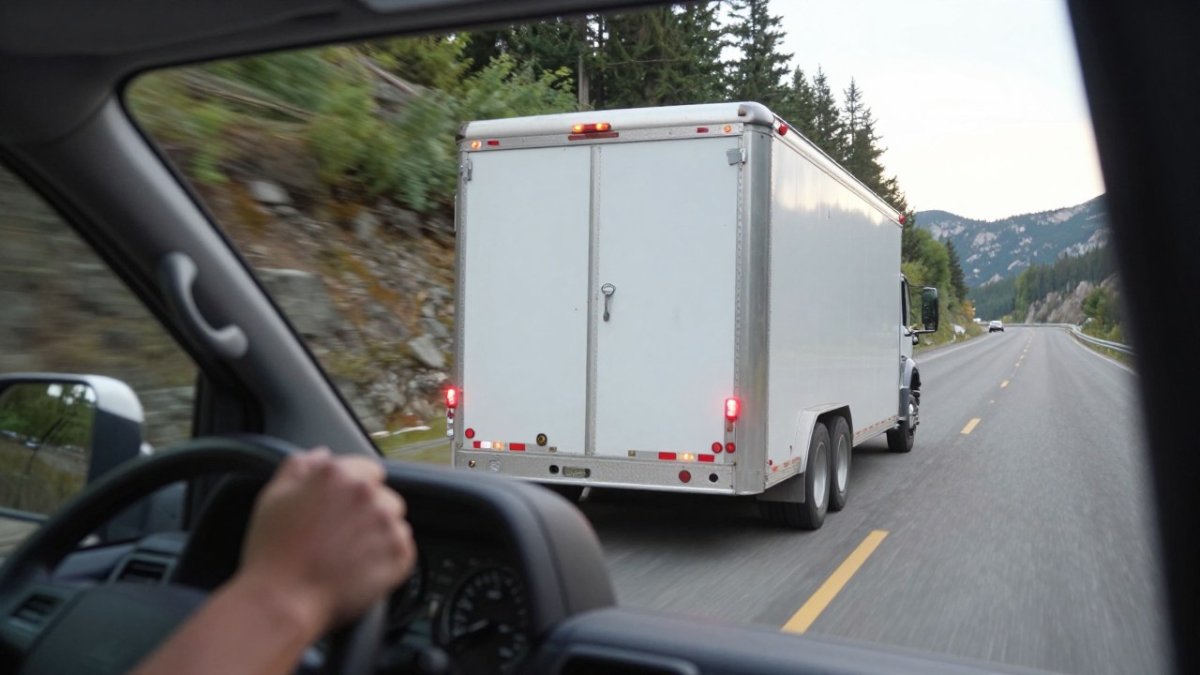
Brake kits do not replace safe driving habits, such as leaving extra following distance and avoiding riding the brakes.
Best Truck Brake Upgrade for Towing: Our Top Picks Compared
Here is how the Power Stop Z36 kits in our catalogue compare by vehicle and scope. Prices are as listed on our site in CAD.
| Kit | Coverage | Starting Price | Notes |
|---|---|---|---|
| Power Stop 13-18 Ram 3500 Front and Rear Z36 | Front and rear, 2013-2018 Ram 3500 | $1,647.49 | Full front and rear kit |
| Power Stop 19-22 Ram 3500 Front & Rear Z36 | Front and rear, 2019-2022 Ram 3500 | $1,712.49 | Full front and rear kit |
| Power Stop 19-22 Ram 2500 Front & Rear Z36 | Front and rear, 2019-2022 Ram 2500 | $1,629.49 | Full front and rear kit |
| Power Stop 20-22 Ram 2500 Rear Z36 | Rear only, 2020-2022 Ram 2500 | $827.49 | Rear axle upgrade |
| Power Stop 20-22 Ram 3500 Rear Z36 | Rear only, 2020-2022 Ram 3500 | $910.49 | Rear axle upgrade |
| Power Stop 13-18 Ram 3500 Rear Z36 | Rear only, 2013-2018 Ram 3500 | $874.49 | Rear axle upgrade |
| Power Stop 05-07 Ford F-250 Super Duty Rear Z36 | Rear only, 2005-2007 F-250 | $647.49 | Rear axle upgrade |
| Power Stop 05-07 Ford F-250 Super Duty Front and Rear Z36 | Front and rear, 2005-2007 F-250 | $1,299.49 | Full front and rear kit |
| Power Stop 2010 Ford F-350 Super Duty Front and Rear Z36 | Front and rear, 2010 F-350 | $1,305.49 | Full front and rear kit |
| Power Stop 2012 Ford F-350 Super Duty Front and Rear Z36 | Front and rear, 2012 F-350 | $1,287.49 | Pad-focused kit |
Starting Price
Always confirm your exact configuration before ordering.
Choosing Your Towing Brake Kit and Next Steps
Confirm your year, make, model and trim against the fitment list first. Then decide whether you need a full front and rear kit or just the rear axle, based on where your current brakes wear fastest. Compare the included hardware and lubricant, and weigh the price against how often you tow.
When you are ready, you can browse performance truck accessories online in Canada with fast shipping and no duties or brokerage fees at checkout. Our performance brake kit listings show the fitment details for each kit.
Frequently Asked Questions
What is the best brake kit for towing a heavy trailer?
The best brake kit for towing depends on your truck and how much you tow. For Ram 2500 and 3500 trucks and Ford F-250 and F-350 Super Duty models, the Power Stop Z36 Truck and Tow kits are built for heavier loads, using carbon-fibre reinforced ceramic pads and drilled and slotted rotors. Prices at My Parts Guy MPG Auto start at $647.49 CAD for the rear-only Ford F-250 kit and run to $1,712.49 CAD for the 2019-2022 Ram 3500 front and rear kit. Confirm your exact year, model and submodel before ordering.
Are drilled and slotted rotors better for towing?
Drilled and slotted rotors help manage heat, which matters on long descents when towing. The Power Stop Z36 kits pair drilled and slotted performance rotors with ceramic pads to maximize cooling. Heat management is one part of towing performance, so pads, hardware and fitment matter as much as the rotor design when you choose a kit.
Do performance brake pads improve towing?
Performance pads can improve stopping under heavy load when they are rated for the job. The Z36 pads use a carbon-fibre ceramic compound designed to handle heavier loads, with stainless-steel pad shims that resist the higher temperatures common on heavy-duty applications. Pads alone do not solve the problem, because the rotors, hardware and your trailer brakes all affect whole-combination stopping.
Do I need to upgrade my trailer brakes as well as my truck brakes?
Upgrading your truck brakes does not replace properly functioning trailer brakes. Your truck brake kit improves stopping at the vehicle, but a loaded trailer still needs its own working brakes and a correctly set brake controller. Check your trailer brake system and controller setup before towing heavy loads, especially on hills.

