
Why High Quality Exhaust Systems Improve Performance
Last Updated: November 4, 2026
Quick Summary
High quality exhaust systems improve performance by reducing back pressure through smoother mandrel bends, straighter piping, and flow-focused mufflers, which supports better engine efficiency and cleaner cylinder filling. They also deliver a deeper tone without in-cabin drone and save weight through thinner-wall stainless steel.
- A turbo-back system on a tuned turbo car can produce a meaningful gain, while a stock naturally aspirated four-cylinder may return very little.
- Borla systems in our catalog are built from T-304 austenitic stainless steel, described as superior to T-400 series such as 409.
- Confirm year, make, model, submodel and engine, because exhaust fitment is exact, not approximate.
- Tampering with or removing emissions equipment such as the catalytic converter and oxygen sensors is not street legal for road use.
- Check hangers and clamps at every oil change, since a loose hanger causes rattles and stress cracks.
Table of Contents
- What a High Quality Exhaust System Actually Changes
- The Real Benefits of High Quality Exhaust Systems
- Aftermarket Exhaust Horsepower Gains: What to Expect
- How to Choose a Performance Exhaust for Your Vehicle
- Legal, Emissions, and Warranty Considerations
- Exhaust System Maintenance Tips
- Trade-Offs and Total Cost of Ownership
- Matching an Exhaust System to Your Build
- Frequently Asked Questions
What a High Quality Exhaust System Actually Changes
A high quality exhaust system is the complete path that carries burned gases from your engine's cylinders to the tailpipe, and upgrading it changes how efficiently that gas leaves the engine. At My Parts Guy MPG Auto, we explain it this way: the factory system is built to a cost and a noise target, not to a flow target. That single fact explains nearly every benefit covered in this guide.
Below, we'll show you exactly what changes, what it realistically delivers on a specific vehicle, and where the trade-offs sit. But first, here's what most guides get wrong: they promise universal gains. Exhaust upgrades are vehicle-specific, and a turbocharged four-cylinder responds very differently from a naturally aspirated V8.
The Real Benefits of High Quality Exhaust Systems
The benefits fall into three practical buckets: flow, sound and weight, and build quality. Each one matters for a different reason, and each has limits worth knowing before you spend.
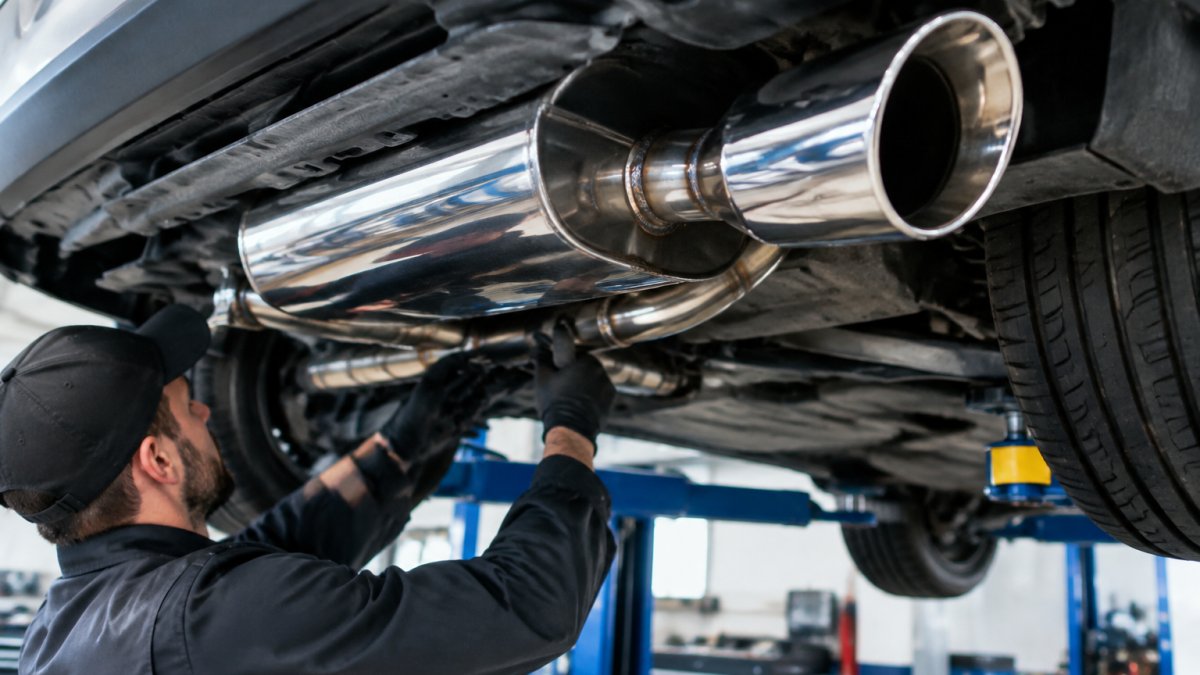
Better Exhaust Flow and Reduced Back Pressure
Back pressure is the resistance that exhaust gas meets as it travels through the system. A high quality exhaust reduces that restriction with smoother mandrel bends, straighter piping, and mufflers designed for flow rather than maximum sound suppression. Less restriction means the engine spends less effort pushing spent gas out, which supports better engine efficiency and cleaner cylinder filling on the intake stroke.
Exhaust Sound, Tone, and Weight Savings
Sound is the benefit owners notice first. A well-designed system delivers a deeper exhaust tone without the in-cabin drone that cheap systems produce at cruising speed. That distinction matters on a daily driver: aggressive at throttle, quiet on the highway.
Weight savings come from thinner-wall stainless steel and simpler muffler internals compared with factory stamped assemblies.
Build Quality, Materials, and Lifespan
Material choice decides how long the system lasts. The Borla systems in our catalog are built from T-304 austenitic stainless steel, which the manufacturer describes as superior to T-400 series materials such as 409.
For readers focused on durability, a billet exhaust manifold flange kit shows what quality construction looks like at the joint level, where cheap systems typically fail first.

Aftermarket Exhaust Horsepower Gains: What to Expect
Horsepower claims are where exhaust marketing gets loose, so it helps to understand the mechanism before you read a single dyno chart. An engine makes power by moving air: it pulls air in, burns it, and pushes exhaust out. The exhaust side is a restriction, and reducing that restriction helps only when the exhaust is actually the bottleneck. On a stock, naturally aspirated engine with a well-designed factory system, the exhaust is rarely the limiting factor, so a cat-back or axle-back typically delivers a small gain, often felt more in throttle response and mid-range torque than in a peak horsepower number.
A turbocharged engine is a different story. The turbine is driven by exhaust gas, so anything that reduces pressure downstream of the turbo lets the turbine spin more freely and reach boost sooner. That is why a turbo-back system on a tuned turbo car can produce a meaningful gain, while the same money spent on a stock naturally aspirated four-cylinder may return very little at the wheels.
Several variables decide your outcome, and none of them is the exhaust alone:
- Engine type and state of tune. A tuned turbo car with a downpipe and a proper calibration responds far better than a stock engine.
- Where the restriction sits. A cat-back removes restriction behind the catalytic converter; a turbo-back or downpipe addresses the most restrictive section on many turbo cars.
- Supporting modifications. Intake, intercooling, and tuning all change how much the exhaust matters.
- System diameter and design. Oversized piping on a stock engine can hurt low-speed velocity; undersized piping chokes a tuned one.
- Measurement conditions. Dyno type, correction standards, ambient temperature, and whether the hood was open all affect the number.
That last point is the one readers should internalize. When comparing systems, look for the vehicle, engine, supporting modifications, and dyno conditions behind any power figure.
Watch out: a dyno sheet showing a gain at one rpm point can hide a loss lower in the rev range, which is exactly where a daily driver spends most of its time. Look at the full curve, not the headline number.
If you want a concrete example of a system built for a turbocharged platform, you can view a 304 stainless cat-back exhaust for the Mustang EcoBoost. Treat the manufacturer's claimed gain as a starting point and confirm the test conditions before you budget for a power increase.
How to Choose a Performance Exhaust for Your Vehicle
Choosing well comes down to five checks, in this order:
Roush 2011-2014 Ford Mustang V8 Enhanced Sound Dual Axle-Back w/ Round Tips →
- Fitment: confirm year, make, model, submodel and engine. Exhaust fitment is exact, not approximate.
- Material: T-304 stainless steel for longevity; 409 is acceptable on a budget but will not last as long.
- Type: axle-back for sound and appearance, cat-back for flow, turbo-back for maximum gains on a tuned car.
- Sound level: listen to clips on your exact engine, not a similar one.
- Legal status: confirm it meets emissions requirements where you drive.
If you already know you want a dual-exit stainless system for a full-size truck, you can check a 304 stainless dual-exit cat-back option as a reference point for what a complete kit includes.
| System Type | What It Replaces | Best For | Typical Gain |
|---|---|---|---|
| Axle-back | Rear muffler and tips | Sound and appearance | Small |
| Cat-back | Everything behind the catalytic converter | Flow and tone | Moderate |
| Turbo-back | Downpipe back | Tuned turbo cars | Largest |
Legal, Emissions, and Warranty Considerations
This is the section most exhaust guides skip, and it is the one that can cost you the most. Exhaust modifications sit at the intersection of emissions law, noise enforcement, and warranty policy, and getting it wrong can mean a failed inspection, a ticket, or a denied repair claim.
Start with emissions equipment. A vehicle's emissions system includes the catalytic converter, oxygen sensors, and related controls, and tampering with or removing that equipment is not street legal for road use. Before buying, confirm what the system replaces and whether it retains the factory emissions components.
Noise is the second front. Exhaust noise rules are set at the provincial and municipal level, so check the rules that apply where you drive. A system that sounds aggressive in a video can be over the limit in person, especially at cruising rpm where drone carries. If you live somewhere with active enforcement, choose a system with a resonator or a valved muffler so you can keep the volume reasonable when you need to.
Inspection programs are the practical test. Keep your factory parts, keep the receipt for the system you installed, and confirm the system is emissions-legal for your vehicle before the inspection date, not after.
Warranty is the third trap, and it is widely misunderstood. Warranty coverage for modified vehicles depends on the manufacturer's policy, so confirm your warranty terms before installing any exhaust system.
A decision framework helps here. For a daily driver, prioritize a cat-back that retains emissions equipment and keeps noise moderate. For a track or off-road build, understand that the legal picture changes and that the vehicle may not be street legal. For a sound-focused build, choose a valved or resonated system so you can pass a noise check and still enjoy the tone.
If emissions compliance is your main concern, an emissions-legal Y-pipe shows the kind of component that addresses the requirement directly rather than sidestepping it. Confirm fitment and legal status for your exact vehicle before you order, and keep the paperwork with the vehicle.
Exhaust System Maintenance Tips
Maintenance is simple and mostly about inspection. Wash the system when you wash the car, especially after winter, to clear road salt from the welds and joints. Check hangers and clamps at every oil change, since a loose hanger causes rattles and stress cracks. Listen for new drone or rasping, which usually signals a failing gasket or a cracked weld. On stainless systems, surface discoloration is normal; deep pitting is not.
Trade-Offs and Total Cost of Ownership
Every exhaust upgrade carries a trade-off. Louder systems can drone on long highway drives. Aggressive setups may draw unwanted attention. Weight savings are real but small. And the cheapest system often costs more over five years once you factor in replacement.
Total cost of ownership favors buying once. A T-304 stainless system with a long warranty typically outlasts two budget systems, and it holds resale value if you return the car to stock. Factor in installation, gaskets, and hardware when comparing prices.
Matching an Exhaust System to Your Build
Match the system to the build, not to a forum thread. A daily driver wants a quiet, durable cat-back. A track-focused car wants maximum flow and accepts the noise. A show car prioritizes appearance and tip finish. If you are building around a specific platform, you can check a 304 stainless cat-back for the FT86 and BRZ to see how fitment and tip sizing are specified for one chassis.
The right exhaust should match your engine, your use case, and your local rules. My Parts Guy MPG Auto offers performance exhaust systems, ships across Canada with no duties or brokerage fees, and monitors competitor pricing. Browse the exhaust range and get the system that fits your build the first time.
Frequently Asked Questions
Do high-quality exhaust systems actually increase horsepower?
Yes, but the gain depends on the vehicle and the rest of the setup. A well-designed axle-back or cat-back system reduces flow restriction and back pressure, which can free up horsepower and torque, especially on turbocharged engines or cars with restrictive stock exhaust. Gains are usually modest on their own and larger when combined with engine tuning and intake upgrades. Expect realistic, vehicle-specific numbers rather than universal claims.
How does an aftermarket exhaust improve fuel efficiency?
Reducing back pressure and improving exhaust gas flow lets the engine breathe more easily, which can support better engine efficiency and, in some driving conditions, slightly better fuel economy. The effect is usually small and depends on driving habits and tuning. A performance exhaust is not a fuel-saving modification on its own, but it can contribute to efficiency when paired with other supporting changes.
Are aftermarket exhaust systems legal under provincial vehicle standards?
Legality depends on your province and how the system affects noise and emissions equipment. Many provinces regulate exhaust noise and require emissions components like the catalytic converter to stay intact. Choose a system that keeps emissions equipment and stays within local noise limits, and check your provincial rules before buying.
Will a new exhaust system void my vehicle warranty?
Warranty coverage for modified vehicles depends on the manufacturer's policy, so check your warranty terms before installing an aftermarket exhaust. Keeping the emissions equipment intact and choosing quality, fitment-specific systems reduces that risk. Ask your dealer about their policy and keep your receipts before installing.

