
Best PartsAvatar Alternatives for Canadian Enthusiasts
Table of Contents
- How to Choose Among Online Auto Parts Retailers
- PartsAvatar vs RockAuto: What the Two Retailers Get Right
- Auto Parts Shipping and Fees in Canada Explained
- Performance Parts Compatibility: Getting the Right Fit the First Time
- A Like-for-Like Price Comparison Method for PartsAvatar Alternatives
- Parts Quality, Brand Tiers, and Warranty Coverage
- Mistakes to Avoid When Switching Parts Retailers
- Frequently Asked Questions
Last Updated: October 12, 2026
How to Choose Among Online Auto Parts Retailers
PartsAvatar alternatives matter most to Canadian enthusiasts who want the right part at a fair total cost, without surprise fees at the door.
Most comparison shopping goes wrong the same way: buyers rank retailers by sticker price, then get blindsided by shipping, brokerage, or a restocking fee when the part does not fit.
Below is a repeatable method for judging any online parts retailer, including how PartsAvatar and RockAuto differ, what cross-border ordering really costs, and the mistakes that turn a brake job into a three-week return fight.
Selection and Vehicle Coverage
Vehicle coverage is the first filter: a retailer that cannot confirm a part fits your exact trim is not a real option, no matter the price. Look for catalog depth by make, model, year, engine code, and trim, plus a part number you can cross-reference against the original.
For enthusiasts running N55, B58, or S58 engines, or trucks with specific axle and cab configurations, generic fitment charts fail constantly. A retailer with strong vehicle coverage lets you drill down to the exact build, not just "fits most 3 Series."
Total Landed Cost: Price, Shipping, and Fees
Total landed cost is the part price plus shipping, taxes, duties, and any brokerage or handling fee, added together before you commit. Compare that single number, not the shelf price: a retailer with a higher part price but free Canadian shipping and no brokerage can beat a cheaper listing once the box clears the border.
At My Parts Guy MPG Auto, we ship from within the country with no duties or brokerage fees, which removes the two line items that most often inflate a cross-border order.
Fitment Guarantees and Return Policies
A fitment guarantee is a retailer's written promise that a part will fit the vehicle it was sold for, backed by a clear return path. Read the fine print: who pays return shipping, how long the window stays open, and whether opened or installed parts are eligible.
The best retailers make this easy to check. If the return policy is buried or vague, treat that as a warning sign, not a minor detail.
PartsAvatar vs RockAuto: What the Two Retailers Get Right
| Factor | PartsAvatar | RockAuto | What to weigh |
|---|---|---|---|
| Catalog focus | Domestic-friendly replacement parts | Huge catalog, common and older vehicles | Match to your vehicle age and rarity |
| Pricing | Competitive on common parts | Often lowest sticker price | Compare landed cost, not sticker |
| Shipping to Canada | Domestic | Cross-border | Border fees change the math |
| Duties and brokerage | Typically none | Can apply | Confirm before ordering |
| Returns | Domestic return path | Cross-border return | Check who pays return shipping |
| Best for | Everyday Canadian buyers | Price hunters on common parts | Depends on your priority |
Auto Parts Shipping and Fees in Canada Explained
Shipping and fees come down to one question: does the part cross a border? Domestic shipments generally cost the part, tax, and shipping, nothing else. Cross-border orders can add duties, taxes, and brokerage, and brokerage is the one buyers forget.
Cross-Border Orders: Duties, Brokerage, and Taxes
A cross-border order can pick up customs duty, applicable taxes, and a brokerage fee charged by the carrier for clearing the shipment. Check the Canada Border Services Agency guidance on importing goods before you assume a cross-border part is cheaper.
Carriers handle clearance differently. Some couriers clear shipments in-house and bill brokerage on delivery, while postal channels hand off to the national postal service and may charge a handling fee instead.
Delivery Performance by Province and Remote Location
Advertised delivery estimates are not real-world timelines. A warehouse in Ontario or Quebec can reach most of the corridor in a few business days, while the Prairies, territories, and rural or remote communities add transit time and sometimes a surcharge.
The variables that move the date are warehouse origin, carrier, distance, and whether the part is in stock or drop-shipped.
Local Pickup and Same-Day Availability
For urgent repairs, pickup beats shipping. Some retailers and local jobbers offer in-store or curbside pickup, and a few offer same-day availability on common parts in major metros. If your car is on jack stands, a pickup within driving distance is worth more than a small price difference. Call ahead to confirm stock at the specific location, because online inventory is not always live.
How to Compare Shipping Before You Buy
- Confirm the warehouse origin, not just the retailer's headquarters.
- Ask whether brokerage is prepaid, included, or billed on delivery.
- Check the carrier and whether it serves your postal code directly.
- Compare the delivery estimate to your actual deadline, not the advertised best case.
Domestic shipping avoids the border entirely, which is why a retailer with in-country fulfillment can compete even when its part price is not the lowest on the screen.
Performance Parts Compatibility: Getting the Right Fit the First Time
Performance parts compatibility means confirming a part fits your exact engine code, trim, and model year, and works with the rest of your setup, before you order. For tuning and exhaust work, "close enough" is not close enough.
Three checks prevent most fitment failures:
- Engine code, not just model. An N55, B58, and S58 are different engines with different parts. Confirm the code, not just the badge.
- Part number cross-reference. Match the retailer's part number against the original or a known-good equivalent.
- Supporting mods. A downpipe or intake may require a tune or supporting hardware to work correctly.
Expert advice saves real money here: a short conversation up front beats a return, a restocking fee, and a week without your car.
A Like-for-Like Price Comparison Method for PartsAvatar Alternatives
A fair price comparison holds the part number constant, then adds every cost to the door. Comparing two brands or grades of the same part is a guess, not a comparison.
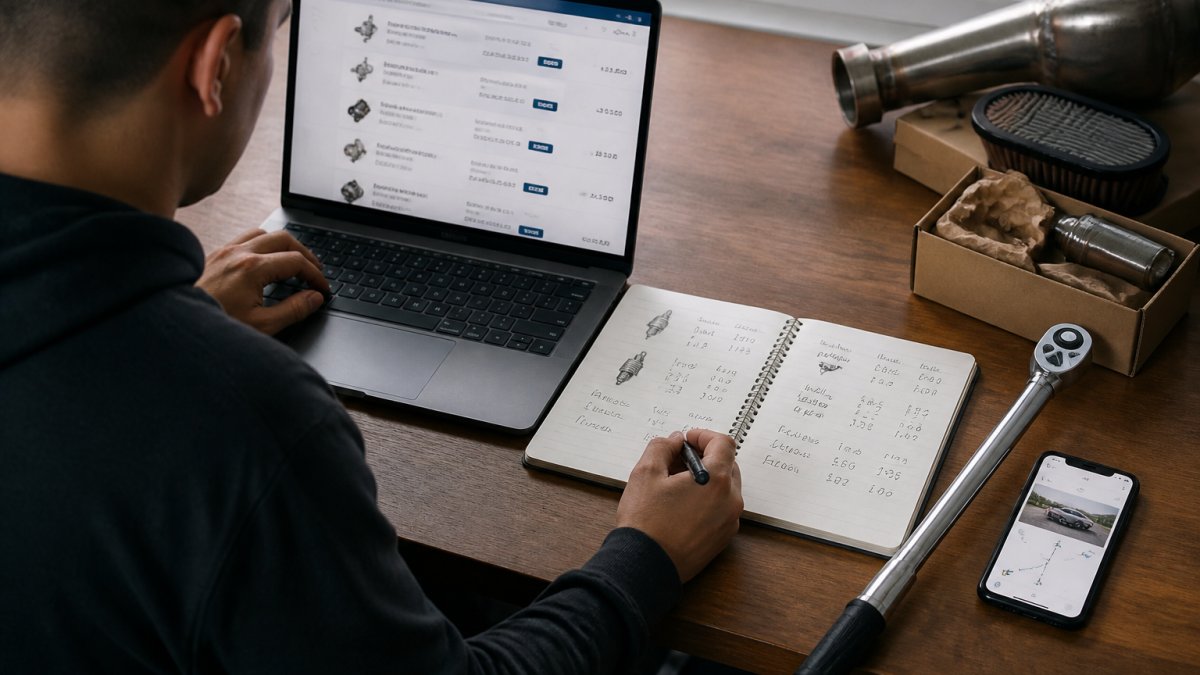
Step 1: Lock the Part Number
Pick one brand, one grade, and one part number, then search that exact number on every retailer. A front brake pad set for a 2018 Honda Civic, a water pump for a 2014 Ford F-150, or an ignition coil for a 2016 Volkswagen Golf are good test cases because they are widely stocked. Write the number down and refuse to substitute.
Step 2: Add Shipping to Your Actual Postal Code
Enter your real postal code, not a generic estimate. Shipping to a dense urban address is often cheaper and faster than to a rural or remote one, and the gap can be large. A flat national rate may look cheap in the city and expensive in the territories.
Step 3: Add Tax
Confirm whether the displayed price includes GST/HST or adds it at checkout. A pre-tax listing can jump by the combined federal and provincial rate at the cart, changing the ranking between two close retailers.
Step 4: Add Duty and Brokerage If It Crosses the Border
This is where most comparisons break. A cross-border order can pick up customs duty, applicable taxes, and a brokerage fee charged by the carrier for clearing the shipment. Brokerage is the silent killer: often a flat fee or a percentage, and it does not show up until delivery. Ask the retailer whether brokerage is prepaid, included, or billed on delivery.
Step 5: Add Return Cost If There Is Any Chance of a Fitment Issue
If the part might not fit, price the return before you buy. Who pays return shipping, is there a restocking fee, and is the window long enough for a weekend install? A cheap part with a costly return is not cheap.
Step 6: Compare the Totals
The lowest landed cost wins, not the lowest sticker. Run the numbers once and the picture gets clear fast.
Worked Example: The Same Part, Two Paths
Take a common replacement part. A domestic order adds tax at checkout and modest in-country shipping, nothing else. A cross-border order adds higher shipping, tax collected at the border, possible duty depending on origin, and a brokerage fee that can run from a flat charge to a percentage of the value. By the time the box lands, the cross-border order frequently costs more, and the return path is slower and more expensive if the part does not fit.
| Scenario | Sticker price | Shipping | Tax | Duty/brokerage | Landed cost |
|---|---|---|---|---|---|
| Domestic order | Higher | Included or low | Added at checkout | None | Predictable |
| Cross-border order | Lower | Higher | Collected at border | Can apply | Often higher than expected |
Parts Quality, Brand Tiers, and Warranty Coverage
Parts quality falls into tiers, and the tier you choose should match how you use the vehicle. OEM parts are made to the manufacturer's original specification.
Warranty coverage is where tiers show up in practice. A premium performance part usually carries a longer, clearer warranty than an economy replacement, and a retailer that stands behind its brands states the terms plainly.
For a daily driver, an economy or mid-tier replacement is often the sensible call. For a tuned car or a truck that works, the premium tier pays for itself in durability.
Mistakes to Avoid When Switching Parts Retailers
Switching retailers goes wrong for a handful of predictable, avoidable reasons.
- Chasing the lowest sticker price. It ignores shipping, duty, brokerage, and return cost.
- Skipping the fitment confirmation. Assuming a part fits because the listing says so leads to returns.
- Ignoring the return window. A short window or a restocking fee turns a small mistake into a real cost.
- Buying performance parts without support. Tuning and exhaust work often needs advice, not just a part number.
A common mistake is treating a retailer switch as a one-time decision. Test a new retailer on a small, low-risk order first: if the part arrives fast, fits, and the support is real, you have found your new default.
Frequently Asked Questions
Is PartsAvatar a Canadian company?
Being Canadian-owned does not automatically mean the lowest total cost. What matters is the full picture: part price, shipping, taxes, duties, and returns. Some shoppers find better value with other Canadian-owned alternatives when you compare like-for-like part numbers and add every fee at checkout. Always verify the final landed cost before ordering.
What should I check before ordering performance parts online?
Confirm the part number matches your exact year, make, model, and engine code. Check whether the retailer publishes a fitment guarantee and a clear return window. Review shipping estimates for your province, and ask whether duties or brokerage fees apply. For performance parts, verify warranty implications, especially if your vehicle is still under a manufacturer warranty. A short pre-order checklist prevents most returns.
How can I compare the total cost of auto parts from different retailers?
Build a like-for-like comparison using the same part number, brand, and quantity. Add shipping to your postal code, applicable taxes, and any duties or brokerage fees. Include the cost of returning a wrong part if fitment is uncertain. Compare the final landed cost, not the sticker price. A part that looks cheaper upfront can cost more once delivery and returns are factored in.
Which online auto parts retailers ship to Canadian addresses?
Many online auto parts retailers ship to Canadian addresses, including several Canadian-owned alternatives. Shipping speed, fees, and customs handling vary widely. Some orders cross the border and attract duties or brokerage charges, while Canadian-based retailers often ship domestically with no surprise fees. Check the delivery estimate and fee breakdown for your province before checkout.
Comparing parts retailers is really a test of total value: the right part, the right fit, delivered without surprise fees, backed by support you can actually reach. At My Parts Guy MPG Auto, we built our store around exactly that, with in-country shipping that avoids duties and brokerage, constant competitor price monitoring, and decades of automotive knowledge behind every fitment question. Subscribe to My Parts Guy MPG Auto and get the right part the first time.