
Buying Performance Parts Without Hidden Fees
Table of Contents
- Why a Lower Parts Price Often Costs More at Checkout
- What You'll Need Before You Start Comparing Prices
- Step 1: Check Auto Parts Shipping Costs Before You Commit
- Step 2: Read the Auto Parts Return Policy Line by Line
- Step 3: Use a Performance Parts Fitment Guide to Avoid Wrong Orders
- Step 4: Verify the Seller Before You Buy Performance Parts
- Step 5: Compare Warranty, Returns, and Total Cost Side by Side
- Common Mistakes That Add Hidden Costs to Performance Parts Orders
- Frequently Asked Questions
Last Updated: October 7, 2026
Why a Lower Parts Price Often Costs More at Checkout
Buying performance parts without hidden fees starts with one habit: compare the final checkout total, not the sticker price. A low list price means nothing if shipping, brokerage, or restocking charges erase the savings later.
That gap between advertised price and real cost is where most shoppers lose money. This guide walks through five checks that keep your total predictable.
The Real Landed Cost of Auto Parts
The landed cost of auto parts is the full amount you pay to get a part to your door and keep it working. It includes the part price, shipping, any brokerage or handling charges, and the cost of returns if something goes wrong.
Most shoppers only see the first number. Here is what actually lands on your card:
- The listed part price
- Shipping and handling
- Brokerage or customs clearance charges on cross-border orders
A part that looks cheaper up front can cost more once these add up. That is the trap.
What You'll Need Before You Start Comparing Prices
Gather your vehicle details before you open a single product page. Missing information is the number one cause of wrong orders and surprise return costs.
Have these ready:
- Your VIN (vehicle identification number)
- The exact year, make, model, and trim
- Engine code if you know it (for example, N55, B58, or S58)
With this list, you can check fitment fast and avoid the returns that trigger fees. Transport Canada vehicle safety and recall information is a useful reference for verifying vehicle details and open recalls before you buy.
Step 1: Check Auto Parts Shipping Costs Before You Commit
Auto parts shipping costs vary widely, and they are the most common source of checkout shock. Always add the item to your cart and get the full shipping quote before you compare prices across sellers.
Watch for these:
- Flat-rate versus weight-based shipping
- Oversize charges on exhaust systems and body panels
- Free-shipping thresholds that push you to buy more than you need
A seller that shows shipping early is usually a seller that respects your budget. One that hides it until payment is a red flag.
Build a Landed-Cost Calculation Before You Check Out
The only number that matters is the landed cost: the total you pay to get the part to your door and keep it working. Advertised price is one line in that total, and usually the smallest one.
Run this calculation for every seller before you decide:
- Part price, the advertised number.
- Shipping and handling, get the exact quote at your postal code, not an estimate.
- Taxes, GST/HST is applied based on the seller's province and your delivery address, so the same part can cost different amounts depending on where it ships from.
- Brokerage or customs clearance, only on cross-border orders, but it can rival the shipping cost itself.
- Core charge, a refundable deposit on rebuilt or remanufactured parts such as alternators, starters, and turbochargers. You get it back only when you return the old core, and return shipping is often on you.
- Payment surcharge, some sellers add a percentage for credit card or buy-now-pay-later transactions.
- Return cost, return shipping plus any restocking fee, weighted by how likely you are to send the part back.
Add those seven lines and you have a landed cost. A part listed at a lower price but with a brokerage fee, a core charge, and a restocking fee can land higher than a part that looked more expensive up front.
Duties, Brokerage, and Cross-Border Surprises
Cross-border orders are where hidden fees bite hardest. Brokerage fees are charged by the carrier to clear your package through customs, and they can rival the shipping cost itself.
Many shoppers report a "no duties" promise that turns into a surprise charge at the door. The fix is simple: ask before you buy.
This is one reason to consider sellers who ship from within the country, with no duties or brokerage fees on orders. It removes the guesswork.
Step 2: Read the Auto Parts Return Policy Line by Line
An auto parts return policy decides how much a wrong order really costs you. Read it before you buy, not after something goes wrong.
Check these five points:
- The return window (how many days you have)
- Whether return shipping is on you or the seller
- The restocking fee percentage
If any of these are vague, treat that as a warning. Clear sellers state their terms plainly.
Restocking Fees and Installed-Part Exclusions
Restocking fees are the quiet killer. A seller might charge a percentage to take a part back, and that fee often climbs if the box is opened.
Installed-part exclusions matter more. Once a part is bolted on, most sellers will not accept it back at all. So the cost of a wrong part is not just the fee. It is the full price of a part you cannot use.
Step 3: Use a Performance Parts Fitment Guide to Avoid Wrong Orders
A performance parts fitment guide is the fastest way to confirm a part will fit before you pay.
Here is how to use one:
- Enter your VIN or full vehicle details
- Match the part to your engine code and trim
- Check for notes on required modifications
- Confirm the part works with any existing upgrades
- Save the confirmation before you order
Performance parts are stricter than standard replacements. A cold air intake or exhaust built for one trim may not clear the components on another. Getting this wrong is the most expensive mistake in the process.
If you are unsure, ask. Our team checks fitment against your VIN before you order.
Step 4: Verify the Seller Before You Buy Performance Parts
Before you buy performance parts, confirm the seller is real and accountable. Counterfeit parts are a genuine risk in this market, and they fail early, fit poorly, and can damage your engine.
Run this quick check:
- Look for a real business address and contact number
- Read reviews on independent sites, not just the seller's own page
- Confirm the seller lists warranty terms clearly
If a price looks too good to be true, it usually is. A genuine part at a fair price beats a fake at a bargain every time.
Concrete Authenticity Checks for Performance Parts
Performance parts are a favorite target for counterfeiters because buyers chase the lowest price and rarely inspect documentation. Use these checks before you commit:
- Manufacturer part number match. Search the exact number on the manufacturer's own site. If the brand does not list the part, treat it as suspect.
- Authorized-dealer status. Most performance brands publish an authorized reseller list. If the seller is not on it, the manufacturer may refuse warranty coverage.
- Packaging and serial numbers. Genuine parts carry branded packaging, holograms, or serial numbers that can be verified with the manufacturer. Ask the seller to confirm the serial before shipping.
Warranty Coverage and Who Actually Honors It
A warranty is only as good as the party backing it. Confirm three things before you buy:
- Who issues the warranty, the manufacturer or the seller. Manufacturer-backed warranties survive even if the seller disappears.
- What it covers, defects in materials and workmanship are standard; damage from installation error usually is not.
- How a claim is filed, some brands require you to ship the part back at your cost, others work through the original seller.
If the seller cannot name the warranty issuer in writing, assume there is no enforceable coverage. That risk belongs in your landed-cost calculation from Step 1.
Competition Bureau Canada guidance on deceptive marketing explains your rights when a seller misleads you about price or product.
Step 5: Compare Warranty, Returns, and Total Cost Side by Side
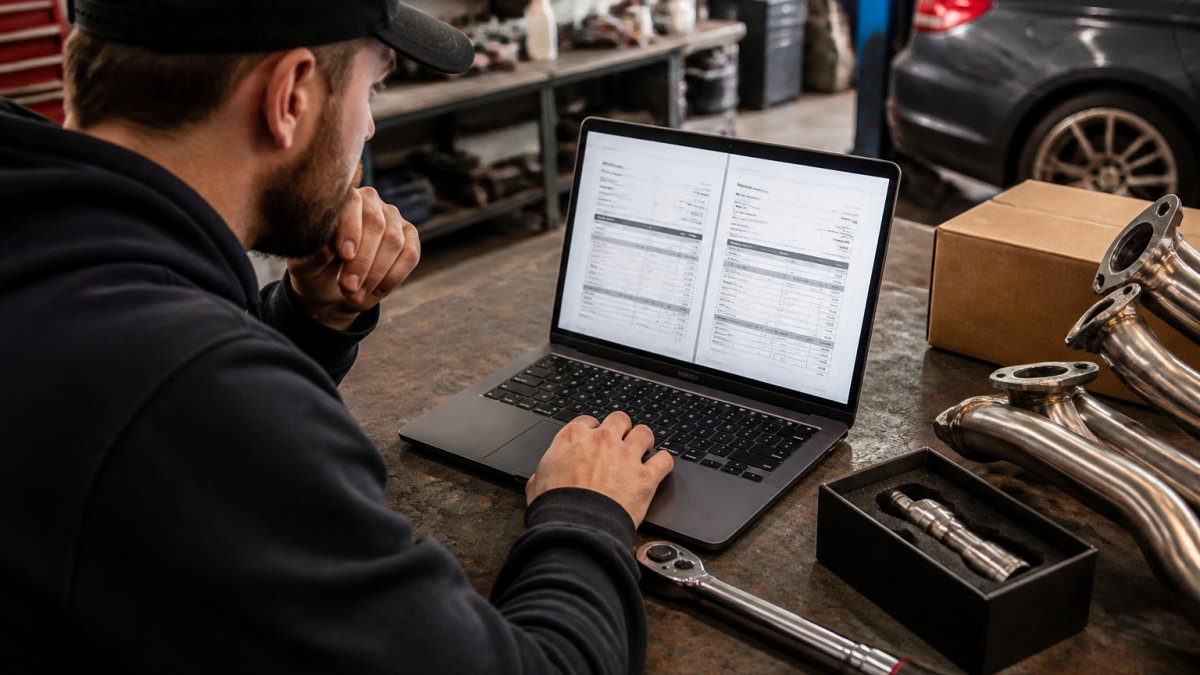
The right way to compare is by total cost, not list price. Build a simple side-by-side view that puts every charge in one place before you decide.
Use this framework:
| What to Compare | Why It Matters | Red Flag |
|---|---|---|
| Part price | Starting point only | Price far below market |
| Shipping | Adds to every order | Quote hidden until checkout |
| Brokerage or duties | Common on cross-border | "No fees" with no details |
| Return window | Protects a wrong order | Vague or missing terms |
| Restocking fee | Cuts your refund | Percentage not stated |
| Warranty | Covers early failure | No terms listed |
If one seller wins on price but loses on returns and warranty, the cheaper part may cost you more. Compare the whole picture.
Common Mistakes That Add Hidden Costs to Performance Parts Orders
Most hidden costs come from the same handful of mistakes. Avoid these and your total stays close to the price you first saw.
- Comparing sticker prices only. Shipping and fees can flip the winner.
- Skipping the fitment check. A wrong part means a return, and returns cost money.
- Ignoring the restocking fee. That percentage comes straight out of your refund.
A dealer price often includes markup and labor on top of the part. A budget-conscious repair means watching the full cost, not just one line. That is the difference between a good deal and an expensive lesson.
Frequently Asked Questions
How can I tell whether an online auto parts price includes all fees?
Add the part to your cart and go through the full checkout process without paying. The final line items should show shipping, duties, brokerage, and any handling charges. If the total only appears after you enter payment details, treat that as a warning sign. Ask the seller in writing to confirm the total landed cost before you order. A transparent performance parts seller will state on the product page whether shipping and duties are included.
What extra costs should I check before ordering performance parts?
Beyond the part price, check shipping charges, duties and brokerage fees on cross-border orders, restocking fees if you return the item, return shipping costs, and any core charges. Also confirm whether the warranty covers the part only or includes labour. On performance parts, ask whether installation voids the return window. These add-ons often turn a lower sticker price into a higher total cost than a local supplier charging a flat, all-in rate.
How can I verify that a performance part fits my vehicle?
Use the seller's performance parts fitment guide and enter your exact year, make, model, trim, and engine code. For BMW N55, B58, and S58 engines, trim and engine code matter because the same model year can use different hardware. Cross-check the manufacturer part number against your vehicle's OEM number. If the listing does not show a fitment tool or a guaranteed fit statement, email the seller your VIN before ordering.
Can I return performance parts after installing them?
Most sellers will not accept returns on parts that have been installed, modified, or had their packaging opened. Read the auto parts return policy before you buy, and note the return window, typically measured from delivery, not installation. If you are unsure about fitment, test-fit the part before final tightening. Ordering the wrong part and installing it usually means no refund, so confirm compatibility first.
Buying performance parts without hidden fees comes down to checking the full cost before you pay, not after. My Parts Guy MPG Auto helps by shipping from within the country with no duties or brokerage fees, monitoring competitor prices to keep ours sharp, and offering fitment help from people with decades of automotive knowledge. Subscribe to get more straight answers on parts, pricing, and fitment.